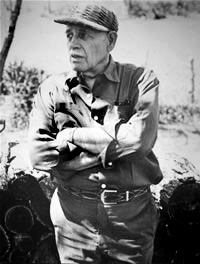
to American Countryman: Essays On The Life Of Hal Borland. Look for additional posts in the months ahead. Though I do not intend to follow any chronological order, these essays (based on years of research) are collectively going to tell the story of Borland’s life and career. Hope you find them interesting. Follow or subscribe (it’s free) to receive email updates on future posts. Email addresses are kept confidential and not given to anyone. Leave comments or send feedback–let me know who you are and what you think, and thanks for stopping by.
When the Legends Die: Hal Borland’s American Classic

In March of 1966 Hal Borland wrote: “I didn’t plan to be a nature writer, but it has paid for the bread and dungarees when nothing else did. . .The fiction is, to me at least, wholly unpredictable. It’s an indulgence, with all the God-awful trash monopolizing the market.” Ironically, over a prolific career that spanned six decades and 36 published books, Borland would be hailed “the dean of American outdoor writers” by Publishers Weekly, and achieve his greatest success with a novel he called “nothing but a flyer on my part. I had no hopes for it.”
Harold Glen Borland was born in Sterling, Nebraska on May 14, 1900. Sterling, located on the Nemaha River in south-eastern Nebraska, had been settled only thirty years earlier, a product of the first great wave of homesteaders after the Civil War. Harold’s Grandfather was one of the town’s earliest citizens, having taken a homestead there in 1872. When Sterling incorporated in July 1876, Grandpa Borland, a blacksmith and expert wagon maker, had become a respected businessman and community leader, and was among Sterling’s first elected Board of Trustees.
Harold’s father, Will, was born in Sterling in 1878, one of sixteen children. In his early teens, Will apprenticed to The Sterling Sun newspaper, quickly reaching the level of master printer. At seventeen, Will left home to travel through eastern Nebraska and western Iowa, working for several papers and perfecting his skills. In these small country shops Will learned advanced techniques from “tramp printers,” highly skilled itinerant men who rode the freights from town to town, picking up work where they could find it. In 1896 he returned to Sterling to be with his dying father, and was at his bedside when he passed away in August. Will remained in Sterling, working as a freelance printer before taking a position as a sales advisor for a printing supply company based in Omaha. On April 26, 1899, he married eighteen-year-old Sarah Clinaberg from nearby Tecumseh, and, in 1907, became part owner and editor of The Sterling Sun, alongside the man who had first taught him the printer’s trade.
As a young boy in Sterling, Harold had what he years later described as “a kind of front row seat to. . .a way of life and a kind of living that was usual if not wholly typical of that time. The time, of course, was the beginning of the century and it just happened that the frontier was still a warm or at least a vivid memory.” He knew old trappers and farmers, Civil War veterans who had fought on both sides, had an uncle who was in the Spanish-American War. On visits to the Clinaberg’s farm in Tecumseh, Harold was thrilled to be included in berry picking excursions, learned canning and cooking skills, and helped cure beef and pork for the winter. He was especially fond of Grandma Clinaberg, an independent “pioneer matriarch” who would often tell her seven children that “every tub stands on its own bottom” and “the Lord helps those who help themselves.” Grandma Clinaberg knew when prime harvest time came in every season, and taught her children how to live with the land and make the best of all it offered.
Another local character who had a lifelong influence on Harold was “Old Phil,” an eccentric loner with wild long hair who lived in a shanty and trapped skunks and muskrats. Phil’s parents were killed when he was an infant. He was raised by Indians, trained as a scout, and served under General Custer until he was severely wounded and hospitalized only a week before the battle at Little Big Horn. Phil told exciting stories of Indian wars, grizzly bears, and massive buffalo herds that roamed the Plains not so many years earlier. To the children of Sterling Phil was a hero, “one of the last of the old scouts and frontiersmen.” From Phil, Harold learned basic survival skills and a lasting respect for nature.
In the first two decades of the twentieth century nearly a million homesteaders migrated west and settled on the Great Plains. In February 1910 a restless Will abruptly left his lucrative position at The Sterling Sun and filed a claim on the remote, short grass plains of eastern Colorado. The closest town was Brush, a full day’s wagon ride 30 miles north. The arid plains of eastern Colorado had long been considered suitable only for grazing, and, other than a few unwelcoming cattle and sheep ranchers, were largely uninhabited when Will took his claim in 1910. Harold and his father built a 14 by 20 foot shell for their home, then covered the roof and outside walls with “bricks” cut from the tough, ancient sod. With a post hole auger they drilled a well and found water where the ranchmen told them there was none. With no trees to provide fuel for the stove, Sarah burned dried cow and sheep chips. They plowed and farmed and struggled to survive on the harsh plains, often with nothing to eat but jack rabbits and corn mush. When times were desperate, Will would travel into Brush to take temporary newspaper work.
Though life on the homestead was difficult, Harold was captivated by the immense beauty of the Plains. On clear days, he would climb the haystack and strain to see the Rockies, out of view many miles to the west. He hunted for arrowheads and collected bleached buffalo bones. He marveled at the endless miles of bluestem and buffalo grass. He spent many summer afternoons watching clouds float across an “indescribable blue of sky and distance.” In spring the Plains came alive with color; teal, mallard and canvasback ducks flocked to the small, temporary ponds created by spring rains and snow melt. Harold found barely visible buffalo and Indian trails stamped into the grass years ago, and an old road made by stagecoaches traveling across the Plains. In adulthood he recalled: “It was a raw, new land, most men said; but it was raw only in terms of Midwest farming, and it wasn’t new land at all–only the white settlers there were new. We were new and I, a boy to whom the whole world was new, gloried in discovery.”

In the spring of 1914 the Borland’s left the homestead and moved north to Brush. Will took a full-time position with The Brush Tribune, paid debts and saved. In April 1915 he quit the Tribune and moved his family south to the burgeoning Plains town of Flagler, CO, where he bought the weekly paper The Flagler News. In Flagler, Harold’s own newspaper career began when he learned the printing and editing trade from his immensely talented father. During his college years at the University of Colorado and Columbia School of Journalism in New York, Harold wrote articles for The Flagler News, while also working as a correspondent for The Denver Post, The Rocky Mountain News, The Brooklyn Times and Brooklyn Standard Union, United Press, and the weekly Kings Features magazine supplement “Home Journal.” After graduation from Columbia in June of 1923, Harold shortened his name to Hal, married classmate Helen LaVene and completed his first book, then spent 1924 and much of 1925 “barnstorming” through Utah, Nevada, California, Texas and North Carolina, working as a copy reader and linotype operator, while submitting short stories and poetry to magazines. Eventually he landed a position as night editor for The Asheville Citizen, before moving back to New York and working briefly for the Ivy Lee Publicity firm. In October 1925 Borland returned to Colorado and purchased the small weekly paper The Stratton Press, only a few miles from his hometown of Flagler.
From the outset, Borland had an unwavering dedication to his work that he credited to his beloved father Will: “He gave me responsibility early, encouraged me to my own decisions, urged me to grow to the limits of my capacity.” This fierce drive to succeed was reinforced in June of 1920, when Harold and several classmates were suspended from the University of Colorado for their part in the publication of a laughably tame lampoon edition of the school newspaper, Silver and Gold. The edition had been approved by their journalism instructor, but when school officials took offense by the paper, the instructor denied any knowledge of the issue, leaving his students to shoulder the blame. Harold simply returned to Flagler without hesitation and poured his energies into his father’s paper. Borland never went back to UC, and years later reflected on UC President George Norlin’s foolish overreaction: “He expelled me from college for specious reasons at the age of 20, an act which drove the steel of resolution into my soul, to prove him wrong.”
In the spring of 1926 Borland sold The Stratton Press and relocated to Helen’s hometown of Philadelphia. During the next eleven years working for Cyrus Curtis newspapers, Hal wrote over 1600 book reviews as well as several editorials a day for morning and evening editions of The Philadelphia Morning Sun and Evening Ledger. In 1937 he left the Ledger to write features for The New York Times Magazine. He stayed six years, reporting on everything from two World’s Fairs to allied war efforts during World War II. In the fall of 1941 Borland began a weekly nature column for the Sunday Times editorial page. From October 8, 1941 through February 21, 1978–the day before his death–nearly 1900 of his outdoor “editorials” appeared in the Times. In 1942 Borland published his sixth book, America is Americans, a collection of patriotic poetry inspired by Japan’s attack on Pearl Harbor. During 1942 Hal also wrote scripts for the Government’s Office for Emergency Management radio program “Keep ’em Rolling,” a popular broadcast hosted by Clifton Fadiman that rallied support for troops serving overseas.
In the summer of 1943 Borland resigned the Times as a salaried employee to become a freelance writer, saying, “I left the Times because I wanted to write and they wanted to make me an executive. I left a good many jobs along the way for the same reason–that darned desk they wanted to put me behind! If they had kept me writing, I might have stayed.” He continued the Sunday nature editorials as a freelancer, scripted film documentaries on Navajo Indians, nature and geology, and wrote book reviews, short stories and features for Harper’s Magazine, The Saturday Evening Post, This Week, Holiday, Better Homes and Gardens, The Saturday Review and Readers Digest. Borland’s feature assignments would often take him on extended research journeys across the U.S., including a four month, 12,000-mile trip in the late summer and fall of 1945 for his post war report on America, “Sweet Land of Liberty.” During this trip, Hal and his second wife, writer Barbara Dodge, were married in Denver.

Hal and Barbara soon began collaborating on short fiction and novellas for McCall’s, Redbook and Colliers. The Borland’s used a tape recorder to capture their ideas, then each would work independently developing story lines. Whenever they bogged down on a piece, they would use a stream of consciousness technique over dinner, rapidly throwing out plot lines then choosing whichever seemed best. Hal took pride in never missing a deadline and stuck to a rigid schedule: “I get up between four and five in the morning and do practically all my reading then. For seven days a week, we’re at our typewriters by seven and keep at it until one o’clock or so.” By 1955 Borland had published over 350 articles and stories, both his own and those written with Barbara.
Borland was a frequent contributor to Audubon magazine, and collaborated on several books with Audubon editor Les Line. From October 1957 until his death in 1978, Borland wrote a 2500 word quarterly “reflective essay on the seasons as they come” for Morris Rubin’s magazine The Progressive. During this period, he also wrote the Wednesday “Our Berkshires” column for the Pittsfield, Massachusetts newspaper The Berkshire Eagle, and a weekly column for The Pittsburgh Press. The articles were primarily nature related, but also included politics, conservation issues, personal anecdotes, and critical pieces on Northeast Utilities and insecticides. Borland was a man of strong opinions who frequently used his columns to voice them. Borland was also a prolific letter writer, turning out hundreds of letters, typed and single spaced, and often three or four pages in length. And, in addition to his published books, Borland completed several more that never made it to print. An impressive amount of work, accomplished by simply making good use of his time.

By the late 1950’s the magazine fiction market had cooled, and Hal decided to devote more time to writing books. In his Connecticut study Borland purposely sat with his back to the window to avoid distraction, saying, “The only way I know to get books written is to sit down at the typewriter and write, not wait for inspiration, whatever that is, and not spend the day staring out the window.” Between the publication of his superb Colorado homestead memoir High, Wide and Lonesome in 1956, and his death, Borland completed 29 books. By far, the most successful of these is his novel When the Legends Die, published by J.B. Lippincott Company on April 24, 1963. When the Legends Die is the beautifully written story of Thomas Black Bull, a Ute Indian boy born on the southern Colorado Reservation at Ignacio in 1907. When Thomas is three, he moves with his parents to Pagosa Springs where his father takes a job in the sawmill to pay a debt. When his father kills a man who repeatedly robbed him, the family flees to the mountains where they build a lodge and live in the old Indian ways. Thomas befriends a young grizzly bear cub and takes the name Bear’s Brother and is happy. But after a few years, Bear’s Brother is taken from the hills and sent back to the Reservation. He is again given the name Thomas Black Bull and forced to learn the white man’s ways. Thomas grows up to become a vicious bronco rider, all the while struggling to reclaim the happiness and peace he had as a child living in the mountains in the old ways of his Ute ancestors. As Hal described the book; “Tom is an Indian brought up by his mother in the ancient tribal ways. Suddenly he is plunged into the white man’s world. It’s like propelling a prehistoric man into the 20th century, and he finds that he can’t make the giant adjustment. To me, this is the tragedy of a man who grew up in the kindly, benevolent world of nature and suddenly found himself confronted by violence and brutality. How will he react? That’s how the story grew.”
In March of 1960 Borland completed the manuscript for his book The Dog Who Came to Stay and began planning for his next project. He had recently been offered a contract to write a nature book for Alfred A Knopf, and also had in mind a prequel to High, Wide and Lonesome, to be set in Nebraska in 1908, titled Country Editor’s Boy. Borland envisioned Country Editor’s Boy as the story of one childhood year in Sterling, with tales of his grandparents, friends and neighbors, “and through it will run the story of Old Phil.” While going through scrapbooks that spring, he rediscovered a short story he had written in 1938 called “The Years Are Round as the Aspens.” The story, which was set in Pagosa Springs and followed a Ute Indian boy who grows up to become a bronco rider, only to return to the hills in the end, was published in American Magazine in September 1939 with the title “Song of a Man.” When writing the story, Hal had drawn upon his own boyhood experiences in Pagosa Springs, where his father had taken a temporary editing job in 1911. That summer, eleven-year-old Harold and his father fished “in the swift white waters of the upper San Juan River” and the pristine water of Lost Lake. Harold hiked in the mountains, where he befriended old miners and loggers as well as local Ute Indians, eagerly absorbing their tales of the “old” way of life, listening to their tribal chants and learning bits of Ute language. After his graduation and marriage in June of 1923, Borland returned to the mountains of Pagosa Springs with Helen, where they camped while he completed writing his first book, a collection of thirty Native American myths and legends titled Rocky Mountain Tipi Tales. Hal made plans to someday build a cabin there, but that sadly never happened.
As Borland reread “Song of a Man” in 1960, he thought he might like to add new characters and rewrite the story as a full-length novel. In August he met with Lynn Carrick, his editor at Lippincott. Carrick very much liked The Dog Who Came to Stay (Borland’s fourth book with Lippincott) and asked Hal what he planned to do next. Hal told Carrick about his idea for the High, Wide and Lonesome prequel, and briefly mentioned an idea for a “book about an Indian boy, a bear cub and a rodeo background, the theme being a man’s inheritance.” Hal and Lynn had become good friends over the past four years and had an excellent working relationship. Borland was not fond of writing outlines; he would simply tell Lynn what he had in mind and Lippincott would draw up the contract. Carrick said he wanted to publish both books, and they agreed to go for the prequel first.
Three weeks before his meeting with Carrick, Borland had accepted the offer from Knopf for one book. It was not uncommon for Borland to be under contract with two publishers at the same time. He considered his “nature books” as separate from his fiction and autobiographical work, and preferred to have them published by a different company. Simon and Schuster had been Hal’s nature publisher, but he was unhappy with their indifferent promotion of his books. When the offer came from Knopf he “was ripe for a change” and signed the contract. Borland worked simultaneously on the Knopf book and Country Editor’s Boy for Lippincott for the remainder of 1960 and into March of 1961. He made steady progress on the Knopf book (Beyond Your Doorstep), but struggled with Country Editor’s Boy and set it aside. Hal concentrated his efforts on Beyond Your Doorstep and delivered his completed manuscript to Knopf in late spring. He then went back to Country Editor’s Boy, again with no luck, and on June 3 notified Carrick he was going to try the “Indian book” instead. Lynn readily agreed to the scheduling change and sent Borland the contract for the book, tentatively titled “The Indian,” in late June 1961 with a deadline of one year. On July 26, Hal sat down and easily wrote chapter one exactly as it would appear in the published book. (Note: When Country Editor’s Boy was eventually published in 1970, it was as a sequel to High, Wide and Lonesome, not a prequel).
In late August Lynn Carrick was relocated to London and George Stevens, a Vice-President at Lippincott, became Hal’s editor. Borland told George that “The Indian” was progressing ahead of schedule, and they decided to move the deadline up to early 1962 with publication in the fall. The project was soon sidelined, however, when Barbara’s aged mother in Waterbury, Connecticut suffered a heart attack at the same time Hal’s mother in Nebraska fell and broke her hip. Trips between Waterbury and Nebraska took up all of November and December, and it was not until January 1962 when Hal returned to work in earnest. In early January he quickly wrote the short children’s book The Youngest Shepherd, then started back full time on “The Indian.” By the 21st of January, progress on the book had stalled, and a determined Borland wrote George a “conscious letter,” where he said, “I have been pushing at The Indian because of my pride in meeting deadlines. . . .I know you told me there was no pressure from you. I appreciate that. I have generated my own pressure; and now I am going to stop pressing and finish the book in its own time.”
For the next six and a half months, seven days a week, he worked on the book, revising some sections as many as six times before he was satisfied. The character “Mary Redmond” gave Borland a great deal of difficulty and had to be rewritten over a dozen times. On August 2 Borland was optimistic the book was nearly complete and sent a progress report to George. He wrote, “This draft is finished. . . .and I hope and pray that it is substantially final. Barbara will read it next week, and I will read it through, and we will pool reactions. . . .You know the varied feelings one gets when a script is apparently done and yet may have holes, the feeling of hope and wonder and mixed satisfaction.”
To his disappointment, Hal and Barbara readily agreed the final section was weak, so he began revising again. On September 17, Borland completed his rewrite and mailed the manuscript to Lippincott, one of the few instances he delivered a piece after its deadline had passed. George enthusiastically read the work, declared it “stunning,” and congratulated Borland on a “distinguished and most interesting job. You have brought off your central character magnificently. . . .and the narrative is handled expertly.” He offered a few minor changes and suggested it be titled When the Legends Die, from an unpublished Borland poem being used as the epigraph. Borland made the revisions, and on October 27, 1962, mailed the final manuscript to Lippincott.
Throughout these hectic months Borland never missed a single Times editorial or Progressive or “Our Berkshires” column, a testament to his years as a newspaperman in Philadelphia and New York. For his October 31 Berkshire Eagle column–four days after completing When the Legends Die–Hal wrote a scathing piece titled “The Sad Case of John Steinbeck.” It had recently been announced that Steinbeck would be the recipient of the 1962 Nobel Prize for Literature, an award Borland clearly felt Steinbeck did not deserve. In the article Borland railed, “for the life of me I can’t understand this award,” and called the awards committee “incredibly stupid” for choosing Steinbeck over more deserving authors such as Robert Frost. He went on to call Steinbeck’s The Winter of Our Discontent “one of the most haphazard and unimportant novels he ever wrote. . . .almost a travesty on the serious novel and one that went to pieces in the end, as though Steinbeck got tired of what he was doing and just slapped things to any kind of conclusion.” Borland pegged The Grapes of Wrath “a period piece. . . .a good novel, but it dealt with a passing situation and actually lacked any profound statement on the condition of man. Read it now and you wonder what all the shooting was about.” He complimented Steinbeck on Of Mice and Men, saying it was “one of the best pieces of sustained writing he ever did,” but concluded “its importance is debatable.” He called Cannery Row “an uneven book of slight importance either as literature or social comment,” and tagged The Wayward Bus “a pretentious piece of trash that made even his friends wonder what had happened to Steinbeck.” Borland dismissed East of Eden, saying “his writing was diffuse and uneven, his viewpoint uncertain,” and declared Travels with Charley “full of cliches both of words and thoughts, a hack job done for magazine publication and put between covers as a book.” Borland referenced an interview that Steinbeck had recently given to The New York Times, where Steinbeck himself said he did not feel he deserved the award. Borland summed up Steinbeck’s work by saying, “there are two or three better than average novels and there are maybe half a dozen excellent short stories,” but concluded “there is no real, coherent body of Steinbeck work. . . .as a social commentator he has been inconsistent, and as a writer he has turned out some miserable prose as well as some vivid, meaningful words.”
Meanwhile, George Stevens was thrilled with When the Legends Die and was wasting no time getting it into print. Stevens had been instrumental in Lippincott’s publishing of Harper Lee’s To Kill a Mockingbird in 1960, and promised to give Borland the same intense promotion they had given Lee and her masterpiece. In late December Lippincott sent Borland page proofs of the book, which he read immediately and mailed back on the 31st. Hal also sent an emotional letter to George, where he beautifully recalled an experience he and Barbara had at Mesa Verde National Park several years earlier. Hal was there to give a speech to a woman’s club, and one evening a group of teenaged Navajo boys put on a fireside demonstration of ancient chants. Hal wrote, “They chanted, and the songs had the mystery, the wonder, the sadness and exultation of that old country. . . .The feeling was deep and primary, elemental. The audience was rapt, silent; then several of the women began to cry.” When the demonstration was over, “It was several minutes before the audience roused and left the hillside, in twos and threes and in silence.” Hal recalled how he and Barbara gathered pinon nuts the next day, which gave them a feeling of kinship with the ancient Native American custom. These events are the basis for Borland’s dedication in When the Legends Die, which reads; “For Barbara, Who has gathered pinon nuts and heard the old songs in the firelight.” Hal reflected on Legends, saying, “Who knows when a book really takes root, or where, or from what seed. . . .I came out with the feeling that I came fairly close to where I wanted to, and I suppose that’s something.”
The January 1963 Lippincott Spring Catalog listed When the Legends Die with an April 24 release date. Four hundred and fifty paperbound review copies were sent to selected booksellers and reviewers throughout the country and the response was immediate. Advance orders quickly reached 14,000, and Legends went into a second printing two months before its scheduled publication date. Borland was about to have the first bona fide smash of his career when tragedy struck. On March 13, 1963, his oldest son, Hal Jr., died suddenly from a massive heart attack in Oswego, New York. He was only 38. Hal and Barbara traveled to Oswego where they spent the next several days burying his son. This was the second child Borland had lost. His youngest son Neil had passed away at age sixteen on December 31, 1945.
Borland was badly shaken and did the only thing he really could do, which was to return to work. He turned in his weekly columns, contemplated his next project, and anxiously awaited the publication of When the Legends Die. But not even his recent loss could dampen Hal’s excitement. He wrote George; “Right now I feel a little like Tom letting himself down into the saddle on a bronc in the chute, waiting for the gate to open on pub day. It looks as though we’re going to put on a show, and I don’t see how the bronc can fail to live up to his billing. It could be quite a ride.” In early April, Borland made a rare trip from his northwestern Connecticut farm into New York City for promotional interviews, and by mid-month Legends was in its third printing with advance orders over 25,000.
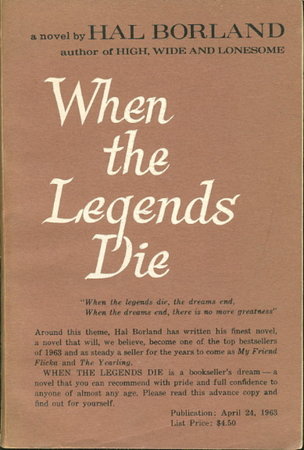
When Legends was released on the 24th, its reception far exceeded Lippincott’s expectations. Reviews were overwhelmingly positive, with Borland universally praised for his writing style and sympathetic treatment of his characters. Saturday Review called the book “. . .a warm, human story told with effective simplicity.” The Wall Street Journal said When the Legends Die was “. . .good reading on many counts; a book of beauty and lofty spirit, warmly recommended.” The New York Herald Tribune complimented Borland on a “. . .tremendously moving story. . .Hal Borland tells the story simply, with the authority of a master.” The Hartford Courant Magazine offered perhaps the most gratifying praise: “Hal Borland. as always, writes with an intimacy of the west and its people and his empathy for the Utes is reflected in every page. . . .For the first time in my memory, the Indian becomes a credible human creature with resourcefulness, tenderness and considerable nobility.” Sales of When the Legends Die were strong from the start, and Borland soon found himself on best seller lists across the country.
When the Legends Die turned up on many lists in 1963, though not all gave Borland cause for celebration. The American Booksellers Association chose When the Legends Die as one of eleven books of fiction given to the White House Family Library that year, and included it in their selection of 105 books “that will be given to the chiefs of state of 100 countries.” Also on the list was Lee’s To Kill a Mockingbird, Carson McCullers’ Clock Without Hands, and Travels with Charley and The Winter of Our Discontent by John Steinbeck. (“I rather like the company there, with only a few exceptions, which I shall not list”). When the Legends Die was considered for the Pulitzer Prize for fiction in 1963 but did not win. (The award went to William Faulkner for The Reivers). Over the next few years, Borland occasionally expressed his frustration with the volatile political forces influencing award committee’s decisions in the early 1960’s. In a May 10, 1964 letter to George Stevens he wrote: “I’d rather not talk about the Pulitzer Prizes. I still burn at the obvious search for special pleading or for authors whose chief distinction is the color of their skin. I had thought those were awards for literary merit, not for propaganda or topical yawps.” On March 20, 1966, Borland wrote a heartfelt letter to his close friend, naturalist Peter Farb, revealing his disappointment still ran deep: “I seem to grow more self critical. . . .You just do what you can, the best you can, and sometimes you hit it right. . . .Legends took off and still is doing well, with unexpected rewards still coming. It even had a toe-hold on the Pulitzer, but didn’t make it because Tom Black Bull was red instead of black in a year when, I have been told, color was a vital factor. How the hell would I know ahead of time? In any case, he had to be what he was. Maybe some of the boys can write for the big money, but some of us can’t, too, because we have to live with ourselves.”
His bitterness over the Pulitzer notwithstanding, Borland never needed to doubt what he had accomplished with his book, or the impact it would have on his readers. When the Legends Die quickly became a mainstay on junior high and high school required reading lists across the country and remains so to this day. The book was, not surprisingly, enthusiastically embraced by the Native American community. For the remainder of his life, Borland regularly received gracious letters from young students, many Native American, who were deeply moved by the book. Letters were often addressed to “Thomas Black Bull,” and told of the profound impact the story had on them. Hal personally answered every letter, often including words of advice and encouragement for the student’s future studies. The letters continued to arrive even after Borland had passed away. In March of 1978 Barbara received a package of letters from a ninth grade English teacher at a reservation school in Wellpinit, WA. He told of how difficult it had been for him to interest his students in basic English until they read When the Legends Die. All of them identified with young Tom Black Bull, and honestly expressed their feelings in their letters to Borland. One youngster wrote, “Myself, I would have up and left into the mountains and found my Bear Brother and gone where no one could find me. Tom, why did you let them push you around and tell you to do this and that? I could not stand to be pushed around or told what to eat, how to dress, and all those things. I feel kind of sorry for you, but you may teach your children the old ways one of these days.”
Borland occasionally gave lectures to English classes, where he cautioned students on the futility of over-analyzing his, or any, book, which only leads to finding false meanings. When writing Legends, Borland aimed for “a kind of semi-poetic job. . .maybe with overtones of meaning,” but was careful that any symbolism”not be labored.” After one lecture in 1966, Hal wrote George Stevens, “Part of my job, of course, was setting them straight on this symbolism thing, which teachers and critics dream up, and also telling them that detailed analysis of writing is a bootless exercise–it’s like taking a watch apart to find the tick; all you get is a lot of little wheels, and no tick.”


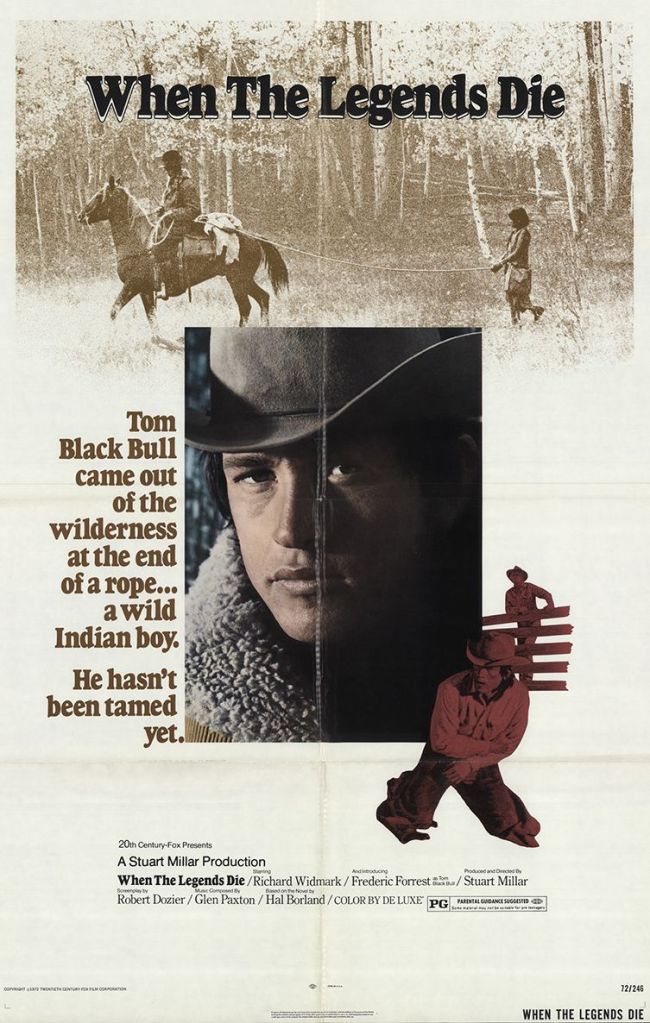
In 1966 Borland sold the film and television rights to When the Legend Die to Hollywood producer Stuart Millar and Embassy Pictures for $30,000. Millar was determined to direct the film himself and offered Borland a screenwriting position, which he turned down. Over the next five years, Millar declined several opportunities to produce the film with established directors. His persistence paid off in 1971 when 20th Century Fox agreed to finance the film with Millar producing and directing. Veteran screen actor Richard Widmark was cast in a leading role as the character Red Dillon. Widmark traveled from his home in Roxbury, CT to Borland’s farm in Salisbury, where they spent an August afternoon discussing the book. Filming was done in September and October 1971 in Durango, Colorado, and the Ute Reservation in Ignacio, the exact site Borland wrote about in the novel. The adult Thomas Black Bull was played by newcomer Frederick Forrest in his first starring role. For the role of Bear’s Brother, Millar cast a young Ute Indian boy named Tilman Box. In early December, Millar sent Borland a group of stills and Borland was completely taken by Tilman Box. Hal immediately wrote to the young actor: “I almost called you Bear’s Brother, because I just saw the picture of you in the Southern Ute Drum. In those two pictures, the ones with the bear, you clearly are the boy I was writing about. . . .I can’t think of a better choice for that role than you are. . . .you have already. . . .made my boy come true. Thank you.”

When the Legends Die has been published in the U.S., Britain, Canada, Germany, Italy, France, Spain, Norway, Japan, Holland, Portugal, Australia, Switzerland and Sweden. It has been featured in book clubs around the world. Millions of specially bound editions have been shipped to junior high and high school English classes since the 1960’s. But exactly how many millions of copies Legends has sold seems to be anyone’s guess. J.B. Lippincott Co. was purchased by Harper and Row in the late 1970’s, and Lippincott sales records have apparently vanished in company mergers and computer system changes over the years. However, Legends went through at least thirteen hardcover printings, and Lippincott was delivering new printings as late as the spring of 1975. The first Bantam Books paperback edition appeared in the late summer of 1964. By November 1972 paperback sales had passed 800,000. Bantam, Bantam Pathfinder and Starfire, and Laurel Leaf paperbacks remained in continuous printings until January of 2012. A 2001 Publishers Weekly list of All Time Bestselling Children’s Books (Volume 248, Issue 51, 12/17/2001) ranked When the Legends Die at #46, and put paperback sales from 1984 to 2001 at 3,353,965. Bantam paperback sales info from 1972 to 1984, and 2001 to 2012, appears to be lost or inaccessible. In November 2011, Open Road Media (openroadmedia.com) began offering electronic editions of When the Legends Die, as well as Borland’s High, Wide and Lonesome, and The Dog Who Came to Stay. Open Road has since added Beyond Your Doorstep, Country Editor’s Boy, Penny and This Hill, This Valley to their Borland titles. In late 2019, Echo Point Books & Media issued new hardcover and paperback editions of When the Legends Die, The Dog Who Came to Stay, Book of Days, Twelve Moons of the Year, Sundial of the Seasons and High, Wide and Lonesome. Though accurate sales figures are elusive, one thing is certain: since its publication in April of 1963, When the Legends Die has never been out of print.
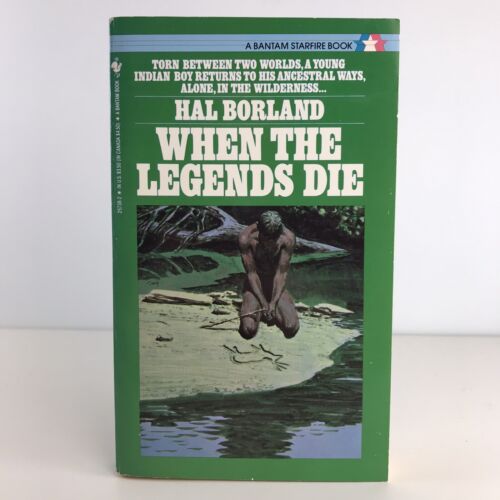
In When the Legends Die, the young boy Bear’s Brother is tricked into leaving the mountains by Blue Elk, an elderly Ute who betrays his people to the reservation for money. Blue Elk tracks Bear’s Brother deep in the mountains by summoning distant memories of when he was young and lived in the mountains in the old ways. He tells the boy that he must come back to Ignacio to sing the old songs to his people, and tell them of the old ways so they would never forget. At the reservation, Bear’s Brother quickly realizes he has been lied to and that he will not tell of the old ways, but will be forced by the white men to learn the new ways instead. Borland described the dilemma as “the story of an American Indian who is stripped of his heritage and traditions, loses his identity with his own self, becomes a man obsessed with violence, and eventually returns to the peace and understanding of his own background.” In August of 1968, Borland received a letter from Dr. Robert Bergman, a psychiatric consultant for the Navajo Division of Indian Health in Arizona. Bergman talked of how he used When the Legends Die in a training course for staff members in Native American boarding schools. The participants in the course, many of Ute ancestry, were all former reservation students themselves and were brought to tears by the book, which reminded them of their own childhood experiences. A grateful Borland wrote Bergman that his letter was “tremendously satisfying” and “pleases me more than I can say,” and added, “Your report about the reception of my novel, When the Legends Die, among the Indian people and those working closely with them makes me feel very proud. I somehow feel that at last Tom Black Bull has been able to tell some of the old tales and sing some of the old songs to his own people, to help make them understand and take pride in their unique heritage.”
Copyright 2014. Kevin Godburn. All Rights Reserved.
Waldo Bailey, Hal Borland, and Bartholomew’s Cobble
In 1890 a thirty-one-year-old Massachusetts landscape architect named Charles Eliot recognized the need for an organization to protect and maintain natural locations throughout his home state. Eliot founded The Trustees of Public Reservations* (the nation’s first land trust) the following year to “preserve, for public use and enjoyment, properties of exceptional scenic, historic, and ecological value throughout Massachusetts.” The Trustees, a nonprofit, charitable corporation that relies on private donations, memberships and occasional public grants, obtains land through gift or purchase and currently owns, manages and protects 122 reservations covering more than 27,000 acres.
*(The group shortened their name to The Trustees of Reservations in 1954).
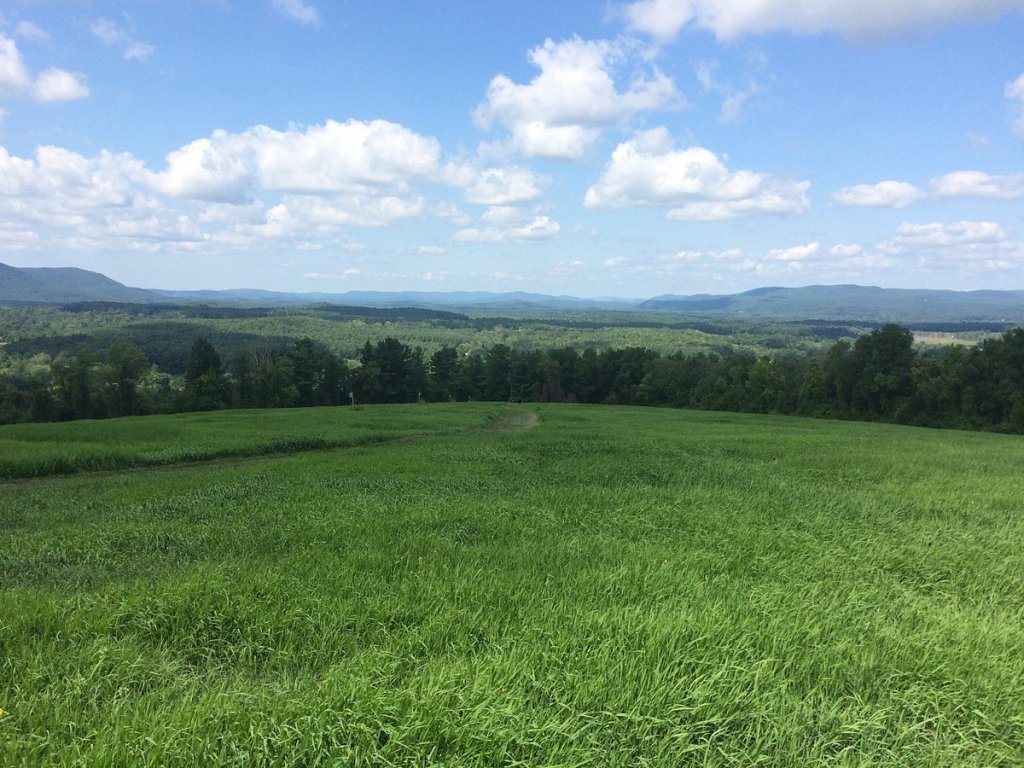
Bartholomew’s Cobble, a 357-acre reserve located in the village of Ashley Falls (town of Sheffield) in the southwest corner of Massachusetts, less than one mile north of the Connecticut border, was acquired by the Trustees in 1946 when the Garden Club of America, and “conservation-minded individuals,” donated funds to purchase 44 acres from then-owner George Bartholomew. The Cobble grew to its current expanse through subsequent donations and purchases of land, including the December 1969 purchase (for $67,500) of 115 acres known as Hurlburt’s Hill, one of the Cobble’s most popular attractions with its magnificent views of the Berkshires and Upper Housatonic River Valley.
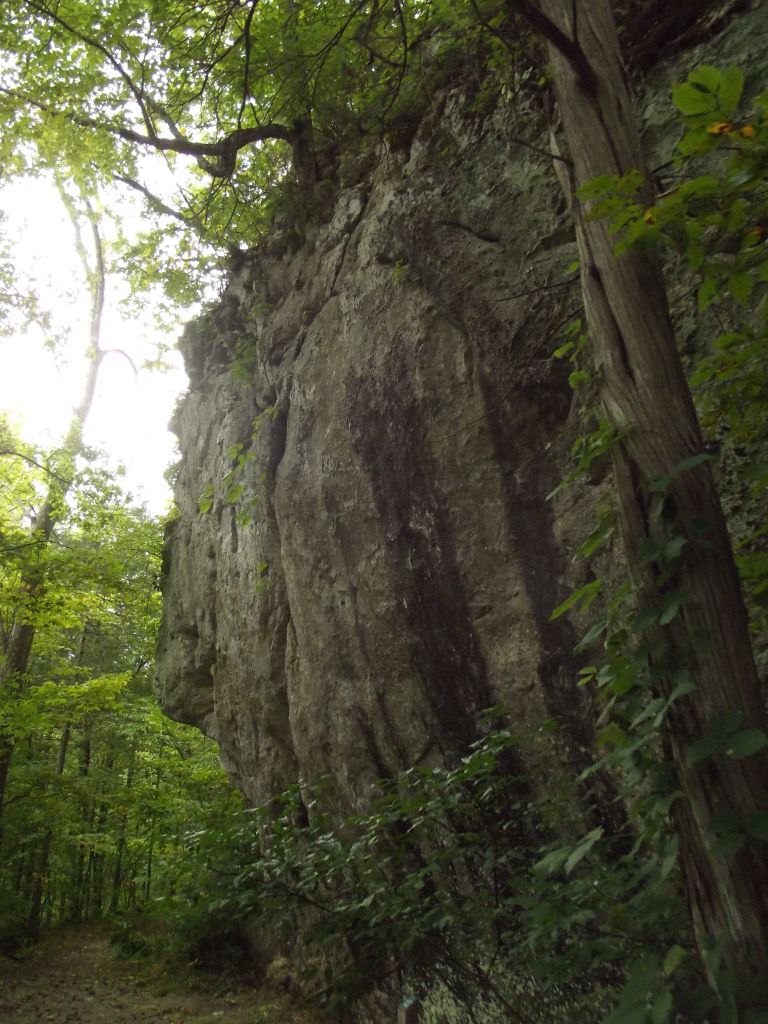
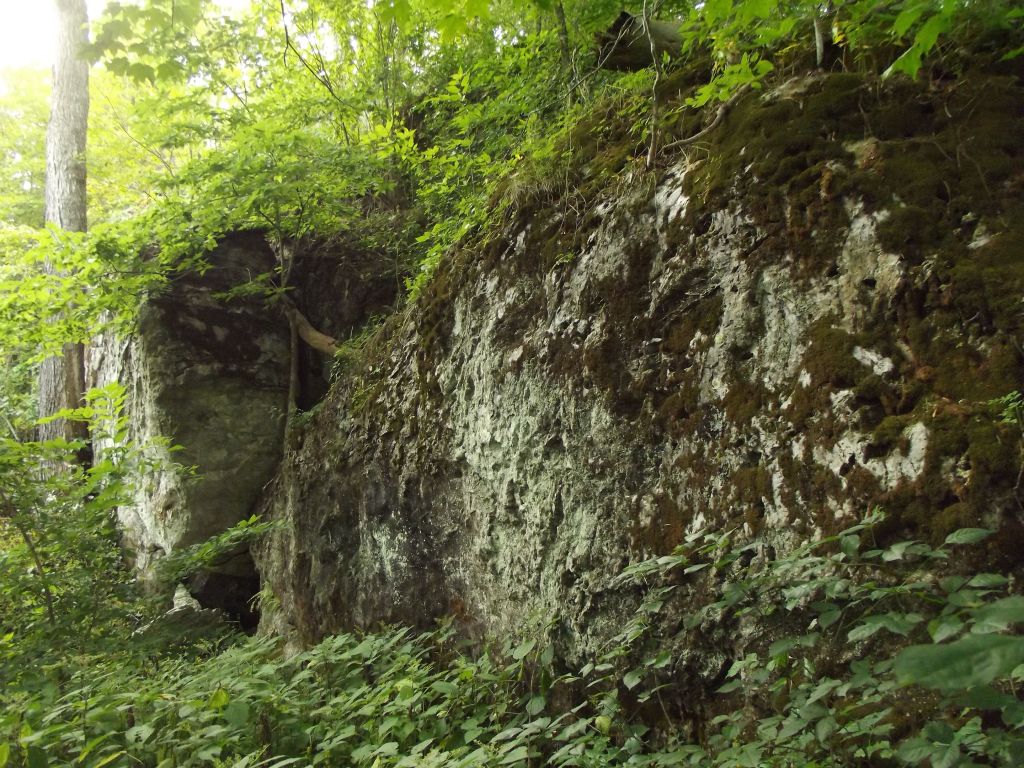
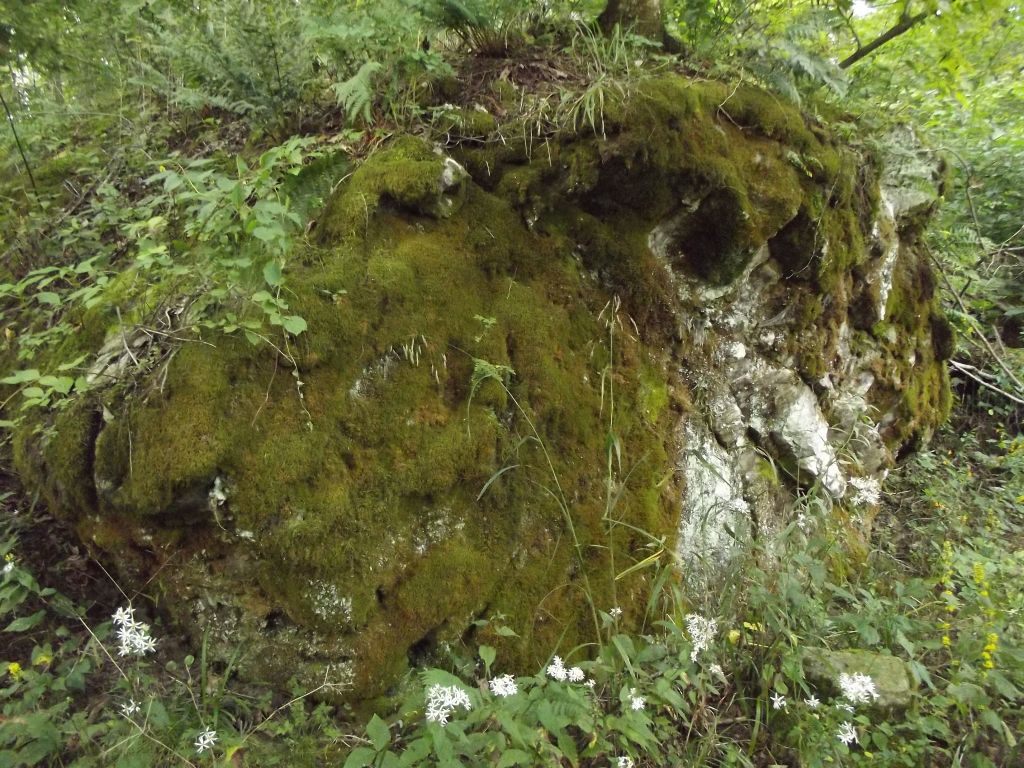
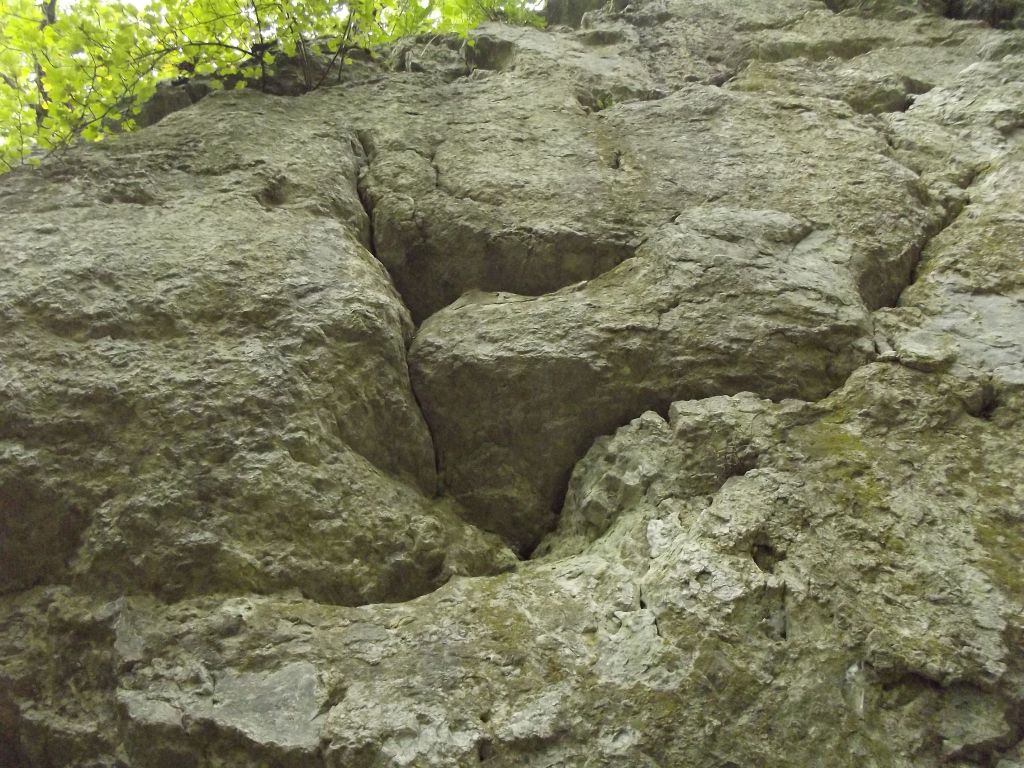
The Cobble is centered by two massive limestone knolls–the north and south cobbles–and bordered by the Housatonic River, woodlands and open meadows. The bedrock of the Cobble is composed of quartzite (metamorphosed sandstone), and marble (metamorphosed limestone), formed by heat and pressure while buried under other rock far below the earth’s surface, and “foldings” of the earth’s crust. (This transformation from limestone to marble “involves a recrystallization of the material and not a change in composition;” it is chemically still limestone). Some four to five-hundred million years ago the Taconic Mountains were formed by a folding, the “Taconic Disturbance.” Another folding, the “Appalachian Revolution,” occurred about 200 million years ago and the Appalachians were formed. Millions of years of erosion, as well as the geologically recent scraping from retreating ice, have worn away the deep rock that once covered the region, giving the Upper Housatonic River Valley and surrounding Berkshires their present, elegantly rounded, beautifully quiet shape.
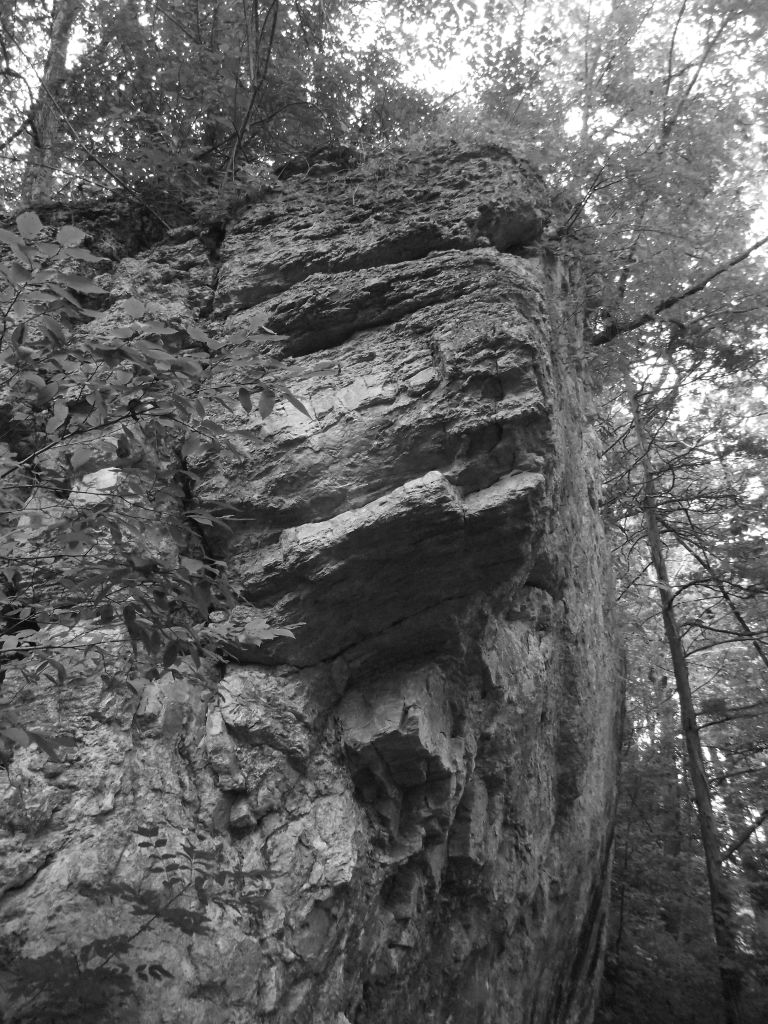
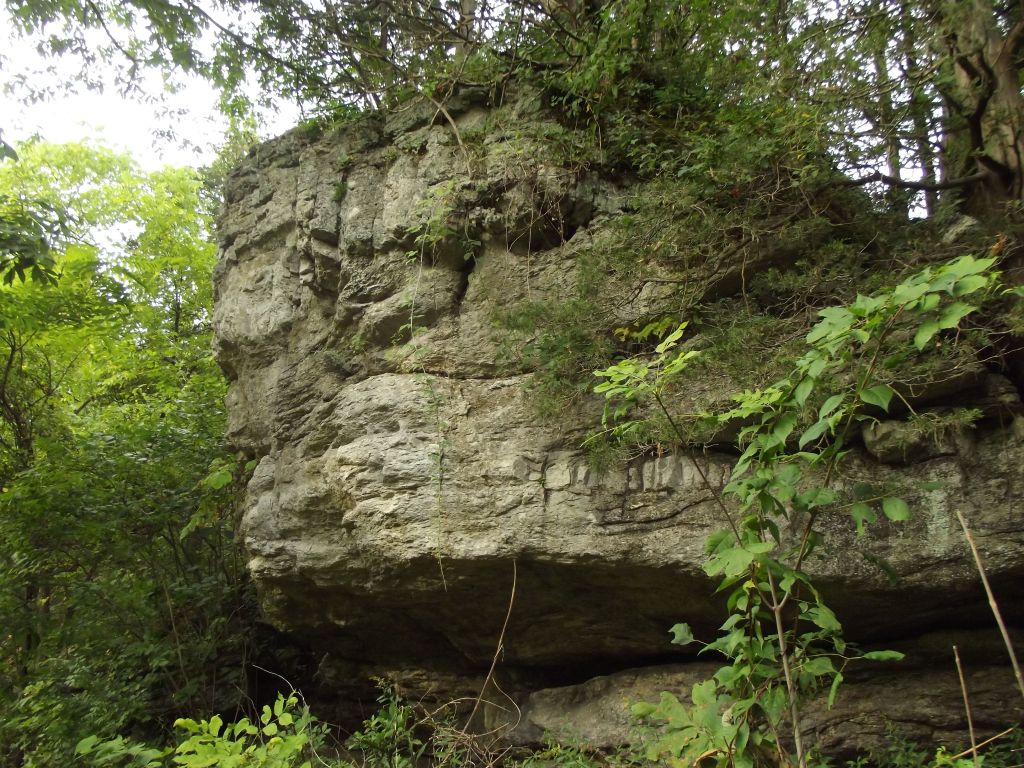
The marble of the Cobble contains the mineral tremolite, making it more resilient to the effects of erosion, causing the Cobble to “rise” above the surrounding fields and river. The fertile soil of the Cobble supports a diverse collection of ferns, grasses, wildflowers and trees; more than 800 plant species have been identified and catalogued. The Cobble is also a favored nesting stop for more than 250 bird species. Botanists, geologists and ornithologists the world over have traveled to study the unique array of life at the Cobble, and, in 1971, the U.S. Department of the Interior/National Park Service named the Cobble a National Natural Landmark. But perhaps the most enduring legacy of Bartholomew’s Cobble is the peace found by those who regularly walk its trails, marvel at the majesty of the Berkshires from the summit of Hurlburt’s Hill, and silently contemplate the slow-moving Housatonic River. For many, the Cobble is a fundamental element in their life, a necessary stop in their daily routine. The Cobble repays this loyalty with unexpected wonder and surprise. During early August of 2021, the Cobble was visited by a young Roseate Spoonbill, a Florida wading bird that had never been observed in Berkshire County before. Birders from Vermont, New Hampshire, Maine and Boston made daily trips to Ashley Falls, hoping for a sighting of the historic visitor. The Spoonbill, which may have been lured north by an unusually rainy and humid summer, made itself at home among a group of Egrets, spending a week feeding in the flooded farmland before disappearing for home. (A terrific cover story on Spoonbills in the winter 2022 issue of Audubon magazine cites climate change and more than a century of ill-advised government policies as the causes for this unprecedented behavior. Spoonbills feed in shallow, fresh water. As sea levels continue to rise, salt water intrudes farther inland and Spoonbills’ nesting grounds are gradually shifting north).

In a beautiful stretch, the Housatonic River winds peacefully through the fields of the Cobble, serving as a landing strip for the hundreds of geese that fly in every day at dusk. You hear them honking in the distance, heading for home. Soon the sky is full of V-shaped formations, flying in from all directions like squadrons of B-17 bombers returning to base in the World War II film Twelve O’Clock High. You can almost picture Gregory Peck standing on the riverbank, anxiously searching the sky and counting returning airplanes. The geese circle the river in a perfectly choreographed dance. There are so many of them you expect them to collide in a tangled heap, but they never do. They sweep in, circle a couple of times, then, with their webbed landing gear extended, glide over the water to a graceful landing. Soon the river is full of geese; there does not seem to be any room for more, yet they keep arriving. Somehow, they all touch down beautifully without a single mishap.
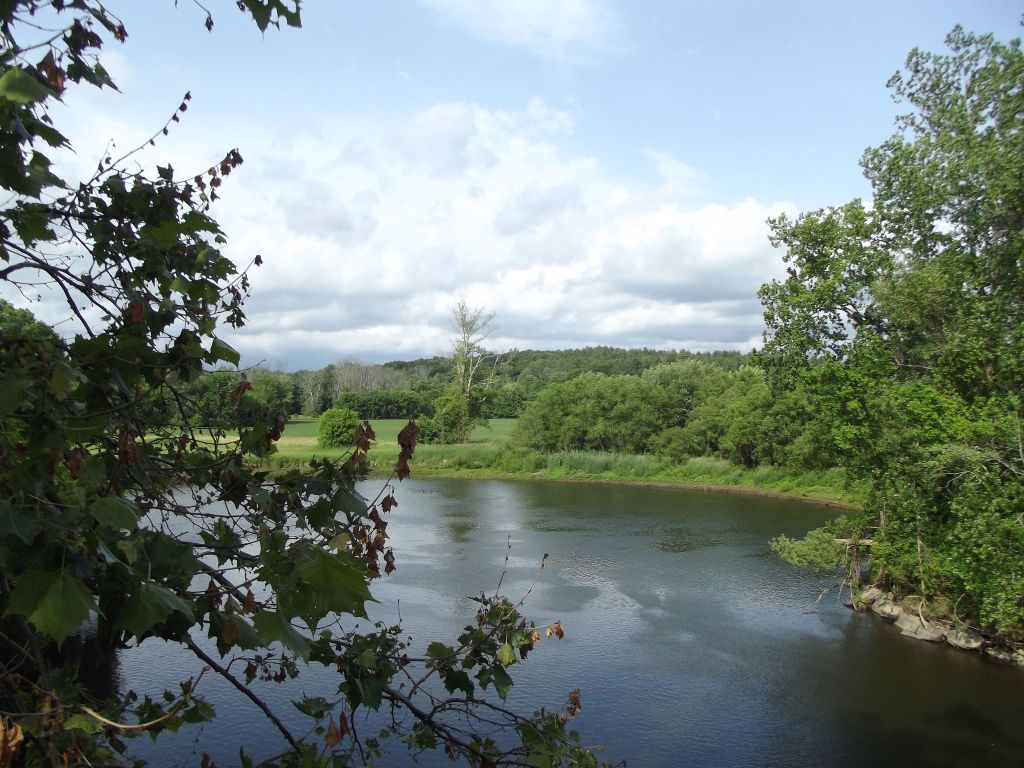
On nights when the moon is full or nearly full, you can look across the fields of the Cobble, the trees clearly visible and casting shadows as if it was just before dusk. The Berkshires to the north and Canaan Mountain to the south are in plain view. Even without the moon the stars cast enough light to safely find your way on foot. Jets bound to and from New York and Windsor Locks carve tic-tac-toe boards in the sky with their flashing lights. Airplanes seem to fly at lower altitudes at night for some reason. On humid summer nights the orange moon-rise is more than I can even describe. Mist rises from the fields and builds into drifting banks of fog. I have stood at the edge of the fields and watched a wandering wall of fog move eerily toward me until I was surrounded, damp from the dew and shivering and loving every second of it. Only once, though, have I seen a meteor–wouldn’t mind seeing a few more of those.

On April 25, 1724, Captain John Ashley was one of four Englishmen that “purchased” an immense tract of land in southwestern Massachusetts, more than ten miles wide and extending twenty miles north from the present day Connecticut border, from native Mohican tribes for “460 pounds in money, 3 barrels of cider and 30 quarts of rum.” The town of Sheffield, in the southwestern corner of that tract, incorporated on June 22, 1733, the first town in Berkshire County to do so. Ashley’s son, an attorney also named John, settled in Sheffield in 1732. Ashley rose to the rank of Colonel and led an attachment in the French and Indian War, served as a judge and selectman, and played a dominant role in expanding settlement and industry in Sheffield. The village of Ashley Falls is named for Colonel John Ashley.

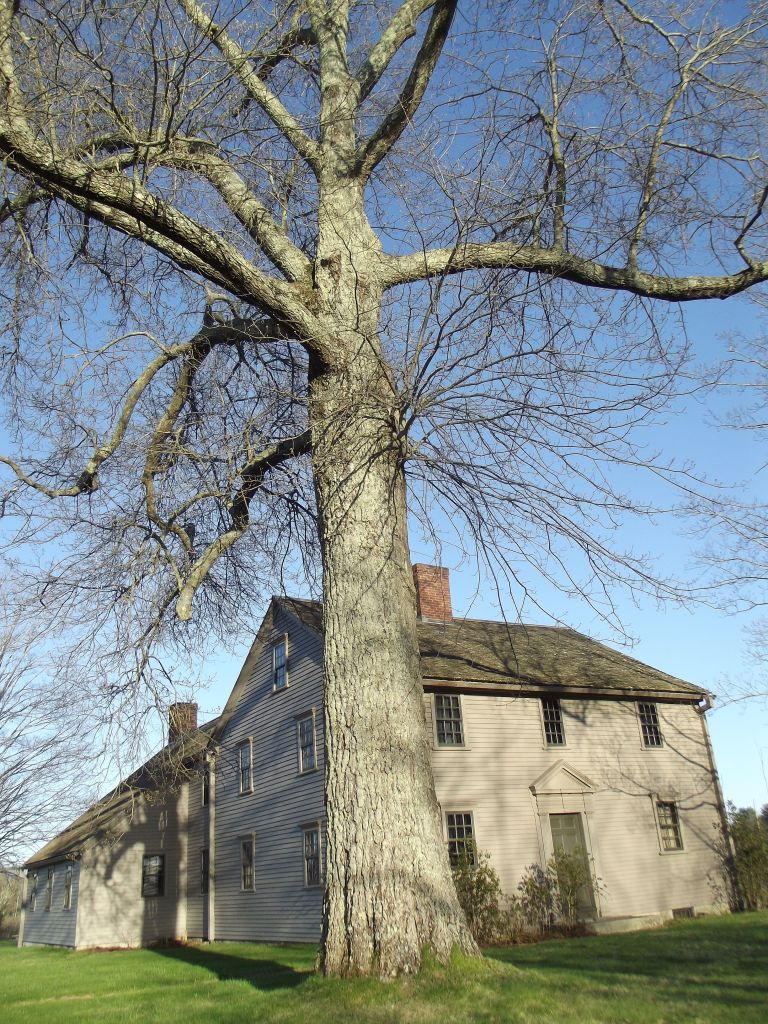
Colonel Ashley married Hannah Hogeboom from Claverack, New York, and, in 1735, built their home along the west bank of the Housatonic River near present day Rannopo Road. The Ashley House served as a hub of 18th-century political discussion and activity in Sheffield. In January of 1773, Ashley and a committee of citizens drafted “The Sheffield Declaration” in the Ashley House, a series of resolves proclaiming “that mankind in a state of nature are equal, free, and independent of each other,” and asserting their independence from British rule. The Sheffield Declaration was published in February, preceding The Declaration of Independence by more than three years.
A family friend described Colonel Ashley as a kind and gentle man, but wrote of Hannah as “a shrew untamable” and “the most despotic of mistresses.” Despite his belief in individual freedom, Colonel Ashley was the largest slave owner in Sheffield. “Mum Bett,” one of Ashley’s five adult slaves, was born in the early 1740s and had been a slave in the Hogeboom house as a child. Mum Bett fled the Ashley home in 1780 after a physical altercation with Hannah and inspired by overhearing discussions of The Sheffield Declaration and the recently enacted Massachusetts Constitution. Mum Bett walked to the home of Theodore Sedgwick, a Sheffield attorney and friend of Ashley’s, and a member of the Sheffield Declaration committee. In August of 1781, at the County Court of Common Pleas in Great Barrington, Sedgwick argued for Mum Bett’s freedom based on the Massachusetts Constitution, winning the case and setting a precedent for the abolition of slavery in Massachusetts. Mum Bett adopted the name “Elizabeth Freeman,” and passed away on December 28, 1829. Colonel Ashley died in 1802 at the age of 92.
After Colonel Ashley’s death, the vast Ashley land holdings were divided among children and grandchildren and eventually sold. The Ashley House had several private owners during the 19th and early 20th-century. Wyllis Bartholomew purchased the house in 1838 and left it to his son Hiram in 1846. Hiram then sold it to his son George in 1852. (The Bartholomew’s also began purchasing large tracts of land from the Ashley family). George A. Brewer purchased the home and 220 acres in 1882 and ran the property as the Eureka Stock Farm. Harry N. Brigham, a great-great-grandson of Colonel Ashley, purchased the house in 1930 and moved it a short distance to its present location on Cooper Hill Road. Brigham and his wife Mary added a small addition to the house as living quarters, and displayed their collections of antiques and pottery in the Ashley House. Edward Brewer and his wife purchased the house in 1945. Brewer had lived in the house as a child when it was owned by his father. The Brewer’s supplemented the Brigham collection with antique household items and farming equipment.
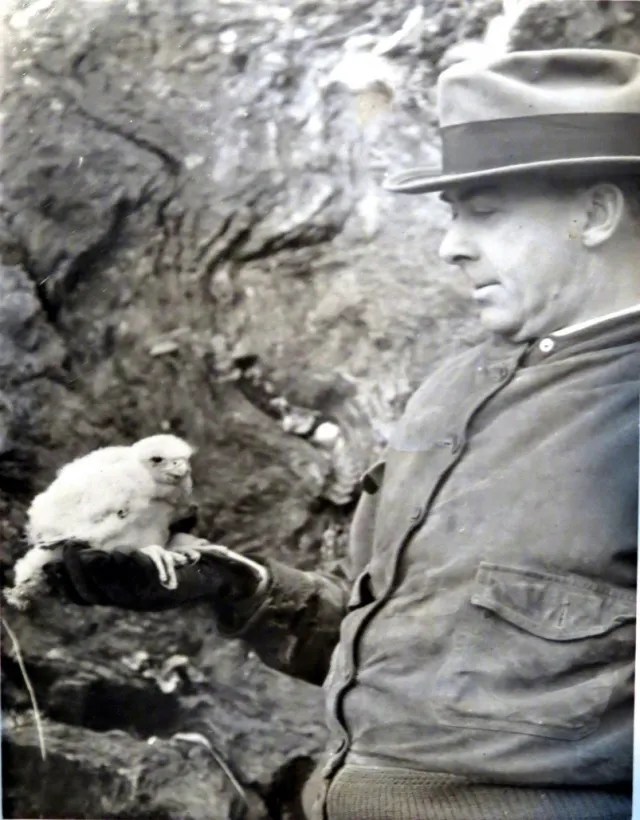
Soon after the Trustees purchased the Cobble from the Bartholomew family in 1946, Waldo Bailey was hired as the reservations’ first Warden. S. Waldo Bailey was born July 10, 1885 in West Newbury, Massachusetts. At an early age, Bailey developed a keen interest in nature and birds in particular. Using the scarce books available at the time, Bailey immersed himself in the study and observation of birds and the natural world that surrounded him. Bailey also indulged his passion for Native American folklore, hunting for arrowheads and Indian relics on his frequent field trips in Essex–and, later, Berkshire–Counties.
In 1902, at age 17, Bailey began documenting his discoveries in his journals. Over the next sixty years Bailey created a remarkable record, more than 4,000 pages long, of bird sightings and migrations–complete with intricate charts of monthly and annual bird counts, detailed observations on plant-life, wildflowers and weather patterns, inventories and drawings of the arrowheads and Indian artifacts that he seemed to instinctively find with little effort, travel dates and locations, as well as his endlessly engaging personal thoughts and insights on all he had seen. Bailey’s journals reveal a man deeply committed to his life’s work, a passionate observer who never faltered in his search for knowledge. Before he reached the age of thirty he had published several articles in The Auk, an ornithological magazine established in 1884. Bailey was also an exceptional photographer and early proponent of color photography in the 1920s. Bailey’s superb photographic work is second only to the awesome achievement of his journals.
Bailey moved to Pittsfield, Massachusetts in 1916, supporting his family with an unlikely position as a cost accountant for the General Electric Company, while continuing his field trips throughout Berkshire County. During the 1920s, Bailey taught a nature appreciation course at Pittsfield High School, and offered traveling lectures on nature, ornithology and photography. Bailey left GE when the Great Depression hit and spent the next several years working for the National Park Service, as well as a supervisor in the Berkshire County Civilian Conservation Corps, while continuing to publish articles, lecture and teach. Bailey was a member of many ornithological societies and committees, and served as president of the Hoffmann Bird Club, a Berkshire County group formed in 1940 and named for Ralph Hoffmann, a friend and field trip companion of Bailey’s, and the author of A Guide to the Birds of New England and Eastern New York (1904). After leaving the Park Service, Bailey was hired as Warden for the Lenox Bird and Wildflower Sanctuary (Massachusetts Audubon Society), a position he held until April of 1946.
Bailey was good friends with a Pittsfield resident named Rene Wendell. Though 31 years his junior, Wendell shared Bailey’s love of nature and enthusiasm for Native American artifacts. “R.W.” is mentioned often in Bailey’s journals as a companion on arrowhead hunting trips to favorite locations in Stockport and Schaghticoke, New York, among others. Wendell’s son, Rene Jr., served as the Cobble’s Warden from 2002 to 2015. In 2014, Rene (pronounced “Rennie”) built a cabin-style screened deck overlooking the Housatonic River. Visitors to the Cobble are invited to sit and read their favorite nature writing, record thoughts and observations in their journals, or simply have a snack and enjoy the view. The beautiful deck is one of Rene’s many outstanding accomplishments during his tenure at the Cobble.


The observations recorded in Bailey’s journals are far too numerous to try to summarize here, but two in particular merit a mention. On September 20, 1953, Bailey wrote that “A party from the American Museum of Natural History, of New York, visit the Cobble,” a group that included Miss Farida A. Wiley. See my article “Anatomy of an Award” for more on Miss Wiley and the role she would play in Hal Borland’s life in 1967 and 1968. Two days later Bailey wrote, “Astronomically Autumn enters at 4:23 A.M. Our brief Summer is over, yet the Autumn brings balmy days, and from year to year seems to loiter later than formerly. Is our season actually changing, as the rapid recession of the glaciers in the Northern Hemisphere might indicate? It’s doubtless too slow an evolvement for a single lifetime to register.”

Hal and Barbara Borland purchased their farm along the bank of the Housatonic River on Weatogue Road–two miles south of the Cobble–from Nelson Case on July 26, 1952. The Borland’s had been living on Rock Rimmon Road in Stamford, CT, making frequent trips about the country for Borland’s freelance magazine and newspaper work. But a serious illness in February of 1952 caused Borland to reevaluate his life and future. Borland wrote of the event in his 1957 book This Hill, This Valley:
“Five years ago I was taken to a hospital and partook of a miracle. I went there dying of a ruptured appendix and advanced peritonitis, and I came back alive. I went there while Winter was passing. . . .I came back to March. . . .March and I were alive, getting acquainted with each other all over again. . . .
“March passed, Spring strengthened, and I knew that I, too, had come to a new season in my life. Almost half my life had been spent in a daily job, a good part of it at a desk in a city. Because of some urgency in myself, I had lived most of those years at the edge of the country, near woods and open fields. I spent evenings and weekends there. . . .
“All that time I had made occasion, at least once a week, to renew my acquaintance with the trees and flowers, the weather and the wind. However, I felt the need to remain close to the city, never more than an hour away. The habit was deeply ingrained, and though I compromised by owning a few acres of hillside and brook and coming to know them intimately, I was being trapped by suburbanization. . . .
“Then I went to the hospital and came back, and it all seemed more of a compromise than a man should make. Reappraisal was inevitable. Barbara, who is my wife and who had known that I would come back when others doubted, agreed that there were things more important than an assignment in Maine or Tennessee. . . .So we sold our suburban acres and moved to Weatogue, to live, to write, to see and feel and understand a hillside, a river bank, a woodland and a valley pasture.
“We came here, not to a cabin in the wilderness but to a farmhouse beside a river. So far as the legalities are concerned, we bought and own a hundred acres, one whole side of a mountain and half a mile of river bank. I have spent the months and years since, living with this small fraction of the universe and trying to know its meaning–to own it, that is, in terms of observation and understanding.”
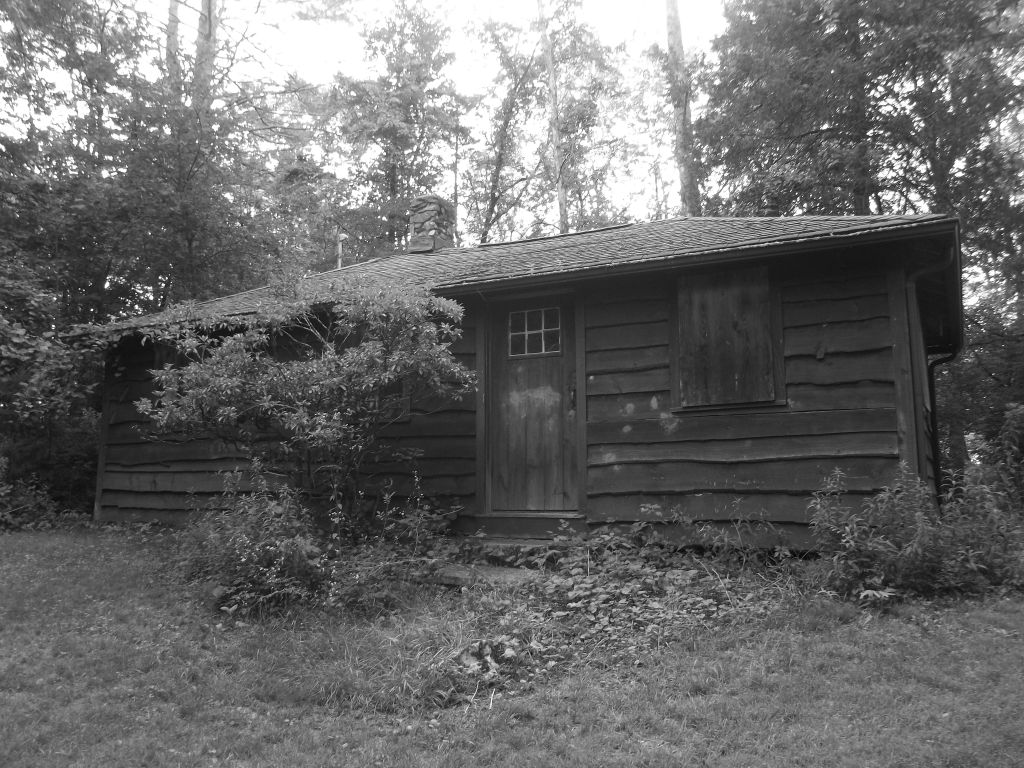
It did not take long for Borland to find his way to the Cobble and Waldo Bailey. The two became close friends, often spending afternoons sitting on the porch of the Warden’s cabin, walking the fields of the Cobble, and hunting for arrowheads. On May 28, 1958, Borland began his weekly “Our Berkshires” column for the Pittsfield, Massachusetts newspaper The Berkshire Eagle, the start of a twenty year run with the exception of a three year break between April 1968 and August of 1971. Borland’s first column featured the Housatonic River, setting a precedent for the many columns he would devote to the river, Ashley Falls, the Cobble and Waldo Bailey, including his August 6, 1958 column “The Cobble”s Waldo Bailey:”
“I don’t know how S. Waldo Bailey happened to be chosen as warden of Bartholomew’s Cobble, and I doubt if anyone really knows. But I have a theory about such natural oases and the people who shape their public character, and it fits this occasion. Any reservation is the result of the work and determination of a few people, and when it comes into being it picks its own warden by a kind of mutual process of elimination. That, regardless of the details, is how Waldo Bailey came to the Cobble. The Cobble needed him, and he needed the Cobble.
“. . . .He has lived in Berkshire County 42 years, still lives in Pittsfield. After he quit the accounting office he spent a time in the forest service. Then, 12 years ago when the Cobble was established, he became the first warden. He is the only warden the Cobble has had. He has probably been host to at least 20,000 visitors there.
“As we sat and talked the other day at the warden’s cottage, Waldo Bailey looked more like a conservative, middle-aged businessman than an outdoorsman. He wore a white shirt and tie. His hat was a gray fedora. He wore low, rubber-soled shoes. He smoked cigars. But his mind ranged back to Indian arrowheads on the boyhood farm, to the smell of salt marsh, to snowshoe trips up Greylock in 28-below-zero weather, to conservation policies and slipshod lumbering, to stream pollution, to the Cobble’s history.
“. . . .If Waldo Bailey didn’t love the Cobble he wouldn’t drive 60-odd miles every day from April till November to watch over it, cherish it, share it with 2,000 visitors every year.”
Bailey was mentioned frequently in Borland’s column, often in articles titled “Notes from the Daybook” and “Interlude at the Cobble.” In one, Borland wrote, “If I hadn’t seen the cardinal I probably wouldn’t have stopped. I was driving up the back road and slowed down at Bartholomew’s Cobble, as always, and on the ground under a cedar just beyond the entrance was this cock cardinal. He looked at me with an expression almost like Waldo Bailey’s and practically said, ‘Hello. Come on in.’ “
In his September 3, 1958 “Our Berkshires” column, Borland became the first to advocate for the purchase of the Ashley House from then-owner Edward Brewer. Borland wrote:
“Mrs. Brewer died three years ago. Mr. Brewer is now 80 years old–he looks a spry 65, by the way–and he would like to see the old house in safe hands, properly protected for the future. For a nominal sum he would turn it over to an authorized group, preferably a state agency, complete with its furnishings, glass, pottery and other collectibles.
“The house stands on a seven-acre plot within a stone’s throw of Bartholomew’s Cobble, already a public reservation. As a private museum of regional history it attracts a constant flow of visitors. . . .and visitors must make appointments with Mr. Brewer. He is a generous host and a knowing guide, but he is not there all day or every day. After all, it is his home, not a public place.
“It should be made a public reservation, a monument to the history of western New England. The modern wing, which supplements the original house admirably, would make ideal quarters for the warden of a combined Ashley House-Bartholomew’s Cobble reservation. The house itself should be a museum. It stands on a part of the original Ashley grant, which included the Cobble.
“If I read the Ashley will correctly, most of present Ashley Falls village and its nearby area were owned by Col. Ashley at the time of his death, for he bequeathed some 3,000 acres. He was a prosperous man, a distinguished man, a leader in every sense and a maker of history. His house should become a public monument, not only to Col. John Ashley but to those who came after him and to the history of our hopes and our dreams and our highest purposes. . . .”
Though Borland was proposing the Trustees acquire the house, a group of local volunteers known as “Colonel Ashley House, Inc.,” perhaps inspired by Borland’s article, purchased the property in 1960 and opened it as a museum.
In September of 1961 Waldo Bailey published his paper-bound book Birds of Bartholomew’s Cobble, a companion to a field guide on the ecology and history of the Cobble that he had written in 1948. On April 6, 1963, Bailey suffered a fatal heart attack in a field in Schaghticoke, NY. He was 77 and died as he had lived his entire life–in nature, hunting arrowheads on the land that he loved. On May 22, 1965, Bailey’s Cobble Warden’s Cabin was opened as a museum in his honor, featuring a small sampling of his arrowhead, butterfly, insect, bird and bird nests, and photography collections. In 1995 the new, much larger, visitor center on Weatogue Road opened to the public. The center features a wrap-around deck and public restrooms, is handicapped accessible, and boasts an impressive collection of bird and animal displays, as well as several beautiful Rex Brasher bird prints. The center also has a fantastic library of vintage and classic nature books, including many Hal Borland titles. The Cobble no longer has a full-time Warden, but a Trustees agent is at the center on Saturdays and Sundays from May through September. The Bailey Museum closed to the public in 2001 due to safety concerns and the cabin’s remote location. Bailey’s artifacts were relocated to the new Visitor Center and the Trustees Western Massachusetts office in Stockbridge.

In the spring of 1970 the Trustees announced their intention to “preserve and protect the Cobble’s existing values and to add new and exciting features which will immeasurably enhance the property’s appeal as a scientific, scenic and educational area, we enlarge the present Reservation and add to it a new dimension–the oldest house in Berkshire County, constructed in 1735 by Colonel John Ashley, which overlooks the Cobble.” To this end, the “Bartholomew’s Cobble-Colonel John Ashley House Campaign” was launched on May 17, 1970 at a meeting of campaign members, held at the house. The Ashley House would serve as a museum as well as living quarters for the Cobble Warden, and could be “purchased for the amount of its mortgage, some $20,000.” The Trustees set a fundraising goal of $167,500 for the acquisition of the house and additional properties, including “Ashley Field,” a pasture adjacent to the Ashley House that one walks across to reach the Visitor Center. Berkshire Eagle columnist and long-time Cobble advocate Morgan G. Bulkeley was appointed campaign Chairman, and Hal Borland was named a Co-Chairman for the committee’s Connecticut chapter. The Beinecke Foundation offered to match the first $25,000 raised, followed soon after by a $5,000 gift from The Berkshire Eagle and $6,800 in private donations. By the end of 1970 the campaign had raised $62,000. The Trustees acquired the Ashley House from Colonel Ashley House, Inc. in 1972. On February 10, 1975, the property was added to The National Register of Historic Places.
Hal Borland continued to devote “Our Berkshires” columns to Bailey and the Cobble throughout the 1960s and 70s. His recurring “River Report” monitored progress made in cleaning the Housatonic River, which had been severely polluted by centuries of sewage disposal, chemical waste from paper mills in Pittsfield, Housatonic, Lenox and Lee, and PCB contamination from Bailey’s former employer, General Electric. Hal Borland passed away from emphysema on February 22, 1978. Borland was honored in a trail bearing his name by the Friends of Bartholomew’s Cobble and the Colonel John Ashley House at their Bartholomew’s Cobble Field Day on June 23, 1979. The location of the Borland Trail was specifically chosen for the significance it holds for Borland and the Cobble. In their June 1979 newsletter announcing the Field Day, the Friends wrote:
“In the afternoon, Morgan Bulkeley, Chairman of the Local Committee for Bartholomew’s Cobble, and Mrs. Hal Borland will dedicate the Borland Trail linking the Cobble with the Colonel John Ashley House. Preservation of the Ashley House and its reunion with the Cobble was Hal Borland’s dream, a goal successfully realized with the purchase of 35 acre Ashley Field two years ago.”
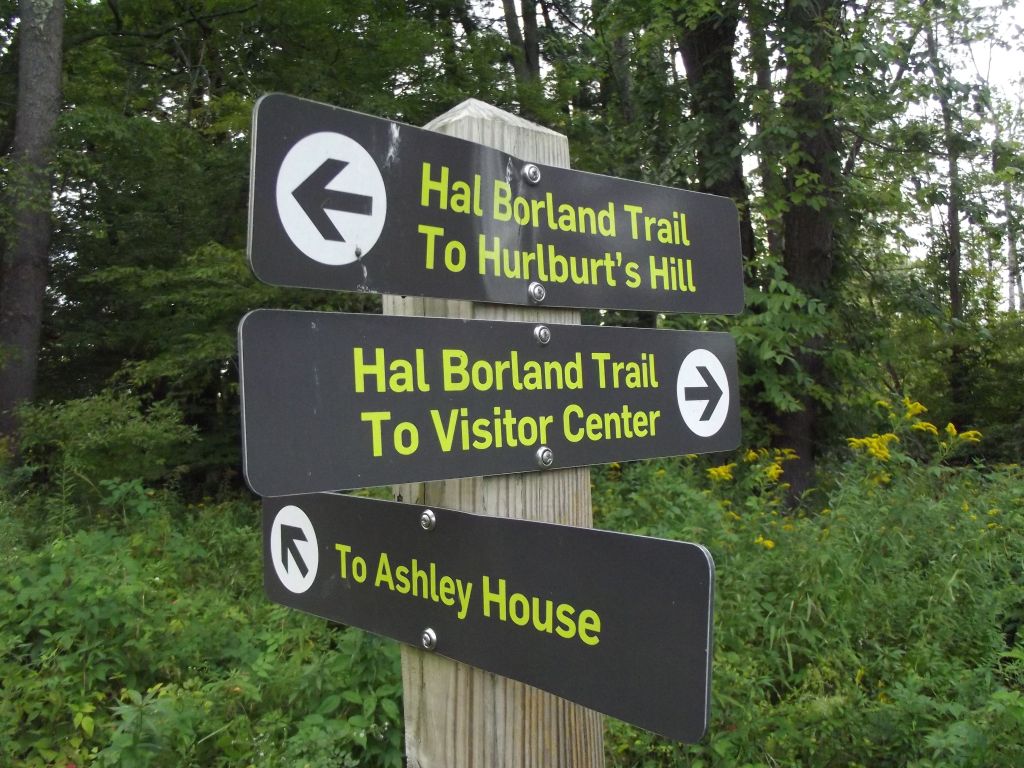

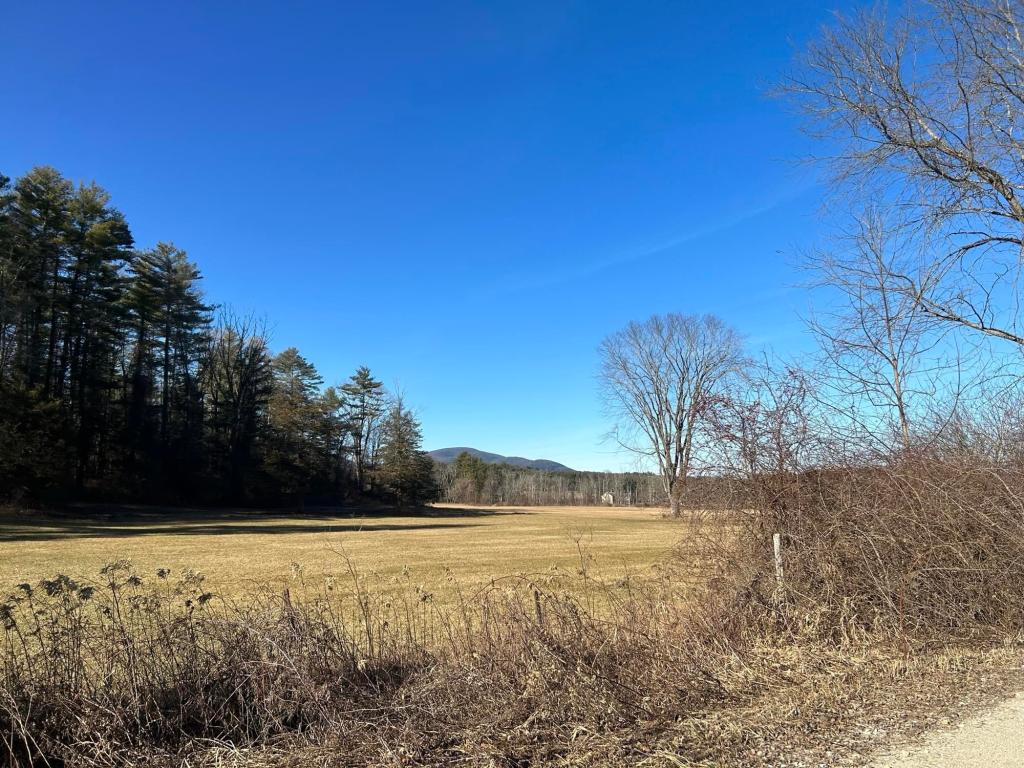
The entrance to the Borland trail lies directly across Weatogue Road from the entrance to the Cobble Visitor Center. As you walk the trail through Ashley Field–still farmed for hay today–you have a clear view before you of the lower Berkshires, just as Hal Borland and Waldo Bailey surely did on their visits in the 1950s and early 1960s. Borland wrote of his friendship with Bailey in his article “Rock Garden in a Cow Pasture,” published in the May 1975 issue of Audubon magazine:
“If I were empowered to create a wild garden to suit my whims, I think I would call into being just such a place as Bartholomew’s Cobble. You probably don’t know Bartholomew’s Cobble, which is an old cow pasture with two rugged knolls of marble, situated in the southwest corner of Massachusetts. . . .
“When I said my wild garden would be like the Cobble, I meant the original reservation that was established in 1946. . .it is the original Bartholomew’s Cobble that impressed me nearly twenty-five years ago, when we first came to northwest Connecticut, and it still does.
“S. Waldo Bailey, warden-naturalist in charge of the Cobble from the time it was established till his sudden death in 1963, catalogued 740 species of plants in the original area. Besides the ferns, he listed 493 species of wildflowers, 95 trees, shrubs and vines, 61 mushrooms, 30 lichens, and nine mosses. There probably are a number of species still to be identified, especially among the mushrooms, and the grasses have yet to be catalogued.
“Waldo Bailey practically was the Cobble when I first knew it. We had moved to the far northwest corner of Connecticut, and a neighboring farmer had mentioned ‘the Cobble.’ I asked what it was, and he said they used to picnic there when he was a boy, an old cow pasture that now was a nature reservation. So we drove up there, only a few miles, walked in, and were soon confronted by a big ruddy man in a gray fedora and a gray business suit complete with white shirt and tie. That was Waldo Bailey. When he saw that we knew a chickadee from a starling he gave us the run of the place, asking only that we be careful of the ferns. It was a dry year and the ferns had suffered.
“We became good friends. He was a Massachusetts farm-boy who became a cost accountant and worked for General Electric until the Great Depression. Then, he once told me, he was glad to get out of an office. He took a job with the U.S. Forest Service and felt free again. He left the forestry job to go to the Cobble when it was established as a reservation, and it always seemed to me that he was a part of the place–firm, stubborn as its native limestone, warmed with birdsong, and softened in unexpected places with wildflowers. Birds were his first love, and he had listed 235 species at the Cobble.
“He was a self-taught naturalist with interests that ranged from prehistory and geology to weather and photography, as well as birds and botany. He had a keen eye for Indian arrowheads, could walk across a newly plowed field and pick them up like pebbles. He and a fellow arrowhead collector were walking across a field not far from the Cobble in 1963 when Waldo Bailey died of a heart attack, simply dropped dead. . . .
“Waldo Bailey’s belief, and in a sense the philosophy behind Bartholomew’s Cobble, was put into words one afternoon when I sat with him on the porch of the warden’s cabin, since enlarged and made into a compact little nature museum and library in his honor. We were discussing the change in weather, year to year, and how plants respond. ‘It’s surprising,’ he said, ‘how most plants will live out a bad season and come back. They just pull back into themselves and wait, which isn’t a bad idea. Ferns have been doing that a long time, a good many million years.’ He stared away for a moment, then said, ‘We can learn a lot from places like this. Nature manages things pretty well, manages her own balances. Man upsets the balance time after time, but nature always tries to restore it.’ “
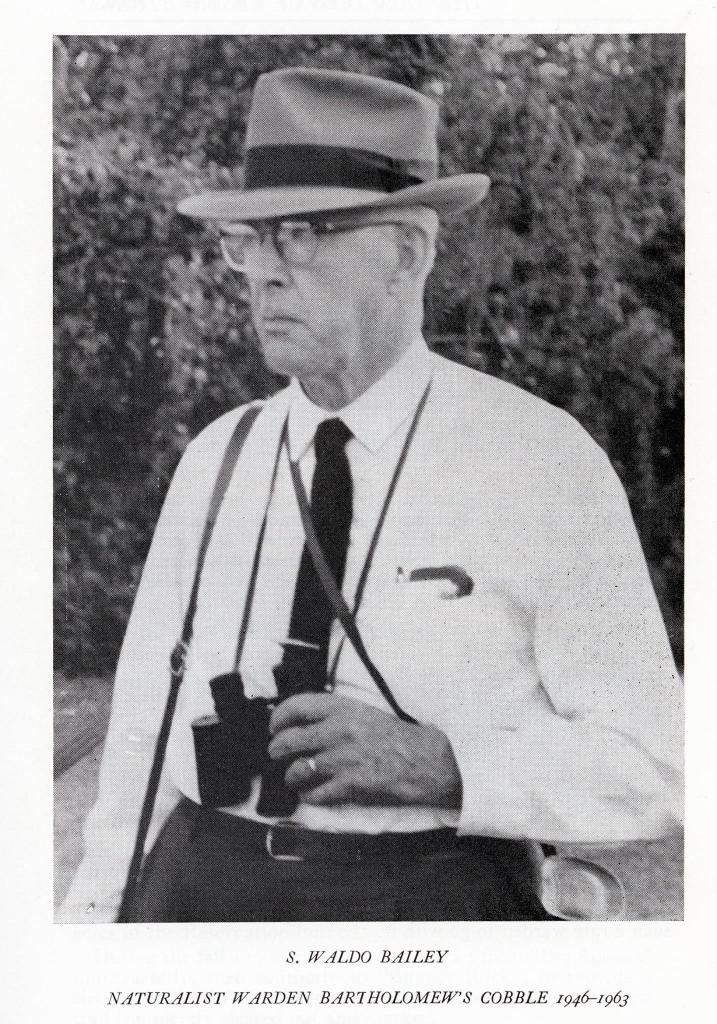
After Bailey’s death in April of 1963, his journals and substantial collections of books, butterflies and insects, arrowheads, artifacts and photographs were inherited by his daughter Priscilla. Priscilla lived her entire life in the Pittsfield home where she was born. Like her father, Priscilla was a great lover of nature and birds, and a long-time member of the Hoffmann Bird Club. Though family members expressed indifference to the journals, Priscilla kept the entire collection intact until she passed away in 2015 at the age of 95. In the last years of her life Priscilla had been friends with Hoffmann Bird Club member Matt Kelly. Kelly was helping Priscilla organize the collection, and had been asked to edit the journals into a much shorter book form, although he had not seen the journals until after Priscilla died. After Priscilla’s passing, ownership transferred to relatives who did not have the means or interest in preserving the collection. They kept and gave away some items, and the rest–including the seventeen binders containing the journals–were thrown into a dumpster.
Kelly was notified by a mutual friend named Sue Cook that the journals were being discarded. Kelly immediately contacted the family, and, through a series of negotiations, saved the journals with the agreement that the Hoffmann Bird Club would assume ownership and their use was strictly on a non-profit basis. Kelly showed the journals to other bird club members including Rene Wendell, and it was decided that the collection should be accessible for public use. Kelly contacted Professor Thomas Tyning at Berkshire Community College for help in making the journals available on the internet, and gave the seventeen binders to Tyning in 2018. Alex Olney, a student at the college on a work-study grant, spent four months scanning and rescanning and creating a search option for the more than four-thousand pages of Bailey’s lifetime devotion to the natural world. The binders containing Bailey’s journals are currently in the collection of the Chapin Library at Williams College in Williamstown, Massachusetts. To view the journals online, visit hoffmannbirdclub.org.
For more on Bartholomew’s Cobble and the Colonel Ashley House, or to plan your visit, go to thetrustees.org.


Copyright 2023 Kevin Godburn All Rights Reserved
. . . . Anatomy of an Award . . . .
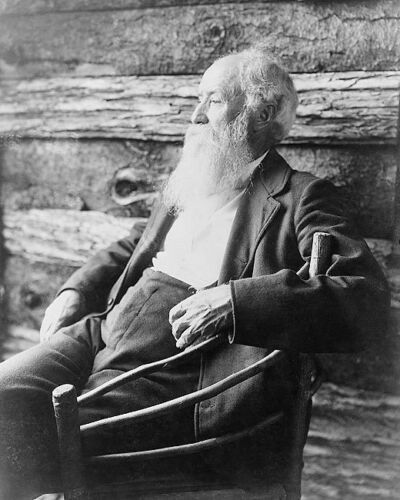
On the first Monday of every April, the John Burroughs Association gathers in New York City and presents their Burroughs Medal to the author of “a distinguished book of nature writing that combines scientific accuracy, firsthand fieldwork, and excellent natural history writing.” Other than perhaps a Pulitzer, no honor is more revered by the nature writer. Since the award’s inception in 1926, Rachel Carson, Edwin Way Teale, John Kieran, Loren Eiseley, and Barry Lopez, among many others, all carried home the Burroughs Medallion.
By the early 1960’s, Hal Borland had established himself as a preeminent voice in the natural sciences. With three undisputed nature classics already to his credit (An American Year, 1946; This Hill, This Valley, 1957; and Beyond Your Doorstep, 1962), Borland had long ago earned the respect and admiration of peers and fans, and had amassed a shelf-full of awards for his efforts. But the Burroughs Medal had thus far eluded him.
Borland’s journey to the Burroughs Medal would be a long one, the culmination of a campaign that began rather innocently in a letter to George Stevens, Borland’s editor and good friend at JB Lippincott Co. On April 3, 1962, Borland wrote Stevens:
“I’ve never gone in for honors, as such, but there are a couple coming up that would interest me. One is the John Burroughs Medal, and the other is one of the Columbia School of Journalism’s Alumni Awards, given annually. I don’t know what one does about such things, or whether you just sit and work and wait to be tapped. But I doubt that it’s quite proper to call. . . whoever is in charge of the Burroughs group, Richard Pough I think, and say, ‘It’s Borland’s turn.’ Anyway, maybe it ain’t Borland’s turn. Do you know about such things? Do any of your colleagues? I feel quite brash even mentioning this to you, but I would be proud of a feather for my cap, and it wouldn’t hurt the books, would it?”
And so began a six-year skirmish that would cast Borland and two of his most ardent supporters against the Burroughs Association’s indomitable Secretary-Treasurer, Miss Farida A. Wiley.
Farida Anna Wiley was born in Sidney, Ohio in 1887, the daughter of ranchers who raised percheron stallions and devoted free time to planting trees. At an early age, Farida (pronounced Fareeda) developed a keen interest in birds and nature. By age eleven she was sending reports on bird sightings and migrations to the U.S. Biological Survey in Washington. She immersed herself in the study of the natural world, a lifelong passion that would make her a self-taught authority on plants and trees, insects and ornithology.
In 1919 Farida moved to New York City to live with her older sister Bessie and brother-in-law Clyde Fisher. George Clyde Fisher was born in Sidney on May 22, 1878. Like Farida, Clyde developed an early fascination with nature, and astronomy in particular. He received his A.B. degree from Miami University in 1905, and he and Bessie were married that same year. After Fisher earned his Ph.D. in botany from Johns Hopkins University in 1913, he and Bessie relocated to New York where Clyde took a position as Associate Curator for the Department of Public Education at the American Museum of Natural History (AMNH). When Farida arrived in 1919, Fisher helped her land a part-time job teaching nature studies to blind students at AMNH, the beginning of her association with the Museum that would last until 1981.
When he was a youngster in Ohio, Clyde began a correspondence with John Burroughs, and over the years the two developed a close friendship. On November 6, 1915, Clyde and Bessie made their first visit to Burroughs Riverby home on the Hudson River in West Park, NY. Clyde, an accomplished photographer, later recalled; “Knowing that Mr. Burroughs did his writing in the forenoons, we proposed not to disturb him until lunch time. . . .I had brought my camera, hoping to get one picture of the great poet-naturalist. Before noon I started out to secure a few photographs about his home. . . .While focusing my camera on the Summer House, I was discovered by Mr. Burroughs, who appeared at the door of his Study, and after cordially greeting me, said, ‘I thought you might like to have me in the picture.’ ” Clyde took three photographs of Burroughs that day: “So my wish was more than fulfilled on that first visit.” After lunch, Burroughs led his guests on a walk to his cabin retreat, Slabsides, discussing native plant and animal life along the way and recalling past visitors. As they said goodbye at the railroad station in West Park that evening, Burroughs told Clyde, “Whenever you want to come to Slabsides, the key is yours.”
Clyde and Bessie visited Burroughs and “camped in this mountain cabin, for two or three days at a time, about twice a year since that first visit.” Burroughs would typically receive guests at Slabsides in the spring and fall, but preferred to spend summers at Woodchuck Lodge, at his birthplace in Roxbury, New York in the Catskill Mountains. During a visit to Woodchuck Lodge, Clyde and Burroughs lounged in the hay barn discussing the work of Thoreau. While Burroughs spoke highly of Thoreau, he also “referred to certain peculiarities and to a number of surprising inaccuracies” in Thoreau’s writing. But Burroughs concluded, “I would rather be the author of Thoreau’s Walden than of all the books I have ever written.”
Clyde and Bessie visited Burroughs and camped at Slabsides over the weekend of November 6-8, 1920, the fifth-year anniversary of their first visit to Riverby. Also in attendance were a small group of Burroughs’ close friends, and Bessie’s sister, Farida Wiley. On Sunday the seventh, Burroughs cooked his “favorite brigand steaks” for lunch and spent the afternoon with the group, discussing his latest book, Accepting the Universe, and examining the surrounding plant life. Clyde “made what proved to be the last photographs of him at Slabsides,” and the last of the nearly two hundred photos that Fisher had taken of Burroughs since November of 1915. (Several of Clyde’s photos were published in The Life and Letters of John Burroughs, Houghton Mifflin Company, 1925). John Burroughs passed away the following spring, on March 29, 1921. Several months after his death, Farida Wiley was among the small group of friends who founded the John Burroughs Memorial Association to honor and preserve the legacy of the beloved naturalist.
Wiley became a full-time member of the AMNH educational staff in 1923, and was named Director of Field Courses in Natural History and Honorary Associate in Natural Science Education several years later. As part of her “Natural Science for the Layman” course, Wiley conducted weekend field trips to sites in Staten Island, Westchester, Long Island, New Jersey, and National Audubon Society reserves in Connecticut. For many years Wiley also taught nature and ornithology courses at Pennsylvania State College and New York University, and from 1947 to 1967 led a summer program at the Hog Island Audubon Camp in Maine. By the early 1950’s, Wiley had been named Assistant Chairman of the AMNH Department of Public Instruction, and was an associate in the Museum’s Conservation and Ecology departments. Wiley’s first book, Ferns of Northeastern United States (1936), was for many years the definitive field guide on the subject. In the 1950’s and early 60’s, Wiley edited the Museum’s “American Naturalists” book series, collections of excerpts from naturalists including John Burroughs, Ernest Thompson Seton and Theodore Roosevelt. Farida never married–she was forever “Miss Wiley.”

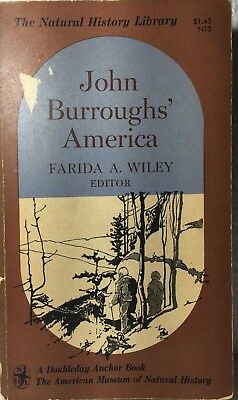

In the mid 1930’s Farida began leading spring and fall migration bird walks in Central Park. Walks were held Tuesday and Thursday mornings, with two walks each day, departing at 7:00 and 9:30am. Walks were held rain or shine, and proved an immediate success. The walks often attracted seventy or more birders, many of whom were regulars who attended multiple walks each year. Farida kept a mailing list of all her birders, including descriptions of each to help remember their names. On days when birds were few, Farida simply instructed the group on the Park’s tree, plant and insect life instead. “She’s a walking encyclopedia,” said one devotee. The press took notice of Miss Wiley; Sports Illustrated and The New York Herald Tribune ran features. The New York Times described her as “bluff, wiry, freckled and partial to tweed suits.” The Washington Post wrote, “She was fond of rust-colored tweeds, sensible shoes and long-billed caps and tam-o’-shanters. She walked at a gallop, binoculars in hand. . . .She wore a pince-nez on her nose. . .her eyes were clear, fierce and alert, crackling with the spirit of scrutiny.” Farida frowned upon disturbing or removing anything from the Park: “We gather nothing in a sanctuary. We do not smoke in a sanctuary.” When asked about the seedy characters they encountered in the early morning park, Wiley replied, “We just step right over them.”
The New Yorker magazine was especially fond of Miss Wiley, running ten features on her between October 1953 and September 1977. In one article, New Yorker reporter Geoffrey T. Hellman attended a Wiley-led field trip and depicted Farida as “Our leader, a slim, erect lady with a determined chin and a brusque but feminine manner, was wearing a trim tan suit, moccasins, and steel-rimmed spectacles that in no way dulled her piercing eyes.” Hellman observed the familial atmosphere of Miss Wiley’s walks:
“The fact that I was a newcomer to what amounted to an unofficial club became apparent to me as a number of my fellow-travelers (mostly ladies wearing either plaid skirts and black woolen stockings or dungarees) greeted Miss Wiley and one another by name and fell into enthusiastic reminiscences of the fall season’s previous junkets. . . .I found myself one of a society for whom, or for many of whom, the day’s excursion was no isolated spree but part of a continuing way of life.”

On May 10, 1962–five weeks after his letter to George Stevens–Borland received notice from Columbia University that he would indeed be the recipient of a Columbia Journalism Alumni Award for 1962, in honor of his “notable accomplishments” since graduation from the University. Borland picked up the honor on May 24. The following spring, April 29, 1963, Borland was again contacted by Columbia informing him of his inclusion on the Fiftieth Anniversary Honors List of the Graduate School of Journalism. According to this letter, the Honors List “recognizes professional accomplishment by alumni of the school,” and “was chosen from names submitted by alumni-at-large and approved by vote of a committee of alumni and faculty.” Borland received his bronze medallion on May 15. What role–if any–George Stevens played in these two awards (Stevens did not attend Columbia) is unclear, but they were without question well deserved and overdue.
But inquiries made by Stevens regarding the Burroughs Medal had gone nowhere, and the matter of a Burroughs award remained stalled until early in 1967 when Les Line joined the effort. Les Line, nature photographer and essayist, was hired by Audubon magazine in 1965 as assistant editor, and appointed editor of the magazine in the fall of 1966. In June of 1964, then-editor John Vosburgh had written Borland, “I’m sure our readers would be grateful to see an occasional piece by Hal Borland in Audubon magazine.” When Line assumed leadership in 1966 he substantially increased Borland’s presence in the magazine. (Line invited Borland to be an Audubon contributing editor in October of 1967, and the two frequently collaborated until Borland’s death in 1978). In early February 1967 Line wrote to Richard Pough, founder of The Nature Conservancy and Burroughs Association board member, recommending Borland for the Burroughs Medal. Pough responded: “Thanks for your suggestion of Hal Borland. I second it strongly and am passing it on to Miss Farida A. Wiley at the American Museum of Natural History, the secretary of the John Burroughs Association.” The 1967 recipient had already been chosen (Charlton Ogburn, Jr. for The Winter Beach), and again the issue stalled until November, when Line took action and another Borland friend, naturalist Peter Farb, entered the fray. The following excerpts are from letters exchanged between Line, Wiley, Borland and Farb during November and December of 1967.
Line to Borland, 11/29/1967:
“After a lot of thought as to the best approach, I have mounted an attack on the John Burroughs Medal Committee. The key to success, the mountain to be conquered so to speak, is Miss Farida A. Wiley at the Museum of Natural History. She is Secretary, I believe, of the Burroughs Committee, and the gal who has the biggest say as to who gets the medal. And, frankly, I think she has it in for you.
“For example, in a note to Dick Pough last year she referred to you as a travelogue and camping writer. And she has been known to say ‘Borland makes mistakes.’ Possibly, but who in Hell doesn’t. And ‘mistakes’ may really be a matter of interpretation, particularly when something disagrees with the staid scientific view of nature.
“At any rate, I have written her a letter, copy enclosed, and shipped the batch of Borland products off to her post-haste.* Blind carbons of my letter have gone to Dick Pough and Roger Peterson, who is on the committee. I don’t know Miss Wiley personally, except that she does lead the frequent bird walks in Central Park. Whether we will win or lose this year, I am not about to hazard a guess. But if we go down, it will be fighting.”
*(Twelve Borland books, supplied by George Stevens).
Line to Wiley, 11/29/1967:
“It was not quite a year ago that I suggested to my good friend Dick Pough that serious consideration should be given to awarding the John Burroughs Medal to Hal Borland. . . .
“I have long felt that if any single American nature writer epitomized the spirit of John Burroughs it was Hal Borland. While I am admittedly prejudiced, I consider him our finest living nature essayist. It has been said that Hal Borland may make mistakes. Undoubtedly this has happened, but I think anyone would be hard-pressed to find any nature writer, from Burroughs to this day, who has not erred, or, perhaps, interpreted some phenomena of nature differently than some scientist.
“I was also surprised at your comment to Dick Pough last February that Borland’s books are of a travelogue and camping nature. This is hardly an accurate description of Borland’s essays, for I don’t recall that Borland has ever written a book on camping or travel.
“I’m wondering if the John Burroughs award committee might not consider Hal Borland’s newest book, Hill Country Harvest, for its 1968 award. Or, it is my understanding that the Burroughs Medal may also be given for an author’s lifework. With this in mind, I have sent to you under separate cover a selection of twelve Borland books. . . .”
Wiley to Line, 12/2/1967:
“I have your second letter recommending that the judges. . .consider Hal Borland’s last book Hill Country Harvest.
“Thank you for your interest. That book has been in the hands of the judges since the middle of September. I have nothing to do with the selection of the recipiant of the award, I only send the books that have been recommended to the judges and appraise them of the comments that the judges made about the books.
“No decission has been made for this springs award.
“I enjoyed the last article by Borland that you published where he was reporting on his childhood experiences at Thanksgiving time. But, since you bring it up, I will have to say that the article in the earlier edition of Audubon magazine where I found within two pages, 10 errors, as I remember it, I stopped reading.
“No doubt Burroughs and other of the earlier writers did make mistakes in their reportings, but unlike the writers of today, they had very few books to consult to make sure their observations were correct.
“Sorry you’re sending all those Borland books here as it is too late to send them to the judges. . . .
“You are certainly to be congratulated on the appearance of the Audubon magazine under your supervision. I don’t know where you get the superb color work done.
“Sorry not to be able to help you on the matter that seems so close to your heart.”
Borland to Line. 12/2/1967:
“Glad to get your letter of the 29th, with the enclosure. I think your approach was perfect, and somewhat heroic. The lady must be rather a formidable person, and for such a one the best line of attack always seems to be frontal and direct. You did it splendidly. . . .
“Here is an amusing one. . . .A month or so back Natural History magazine asked me to do a piece on my reference library as a possible guide for amateurs building their own reference shelves. And about 2 weeks ago the editor phoned and asked if I realized that I had mentioned 68 books in the piece. . . .Then he said they were running some kind of contest and had $500 left over, and would I mind if they used it to buy those 68 books and make a special prize of a Hal Borland Nature Library. I didn’t mind. So I guess that’s what they’re going to do. Right under Farida Wiley’s nose! Good Lord, it just occurred to me that I may have made a mistake in one of those titles!”
Line to Wiley, 12/4/1967:
“I do regret that my recent letter was the second concerning Hal Borland’s new book. . . .I profoundly apologize for inundating you with correspondence on behalf of a favorite author.
“I am really chagrined that an article with so many errors found its way into the pages of Audubon. . . .
“I would certainly appreciate it if you could take a few minutes of your valuable time to mark-up that particular article with the errors that you caught and send it to me. . . .
“Certainly, ten errors within the space of two pages would make one such as yourself decide to throw up your hands in horror.
“I hope, one day, to join you on a Central Park bird walk. But I find that an editor’s free time just doesn’t exist.”
Line to Borland, 12/5/1967:
“The reply from the formidable Miss Wiley was prompt and blunt. I enclose a copy of her rather astonishing letter and a blind copy of my carefully worded response to her.
“What I have politely told her, in reference to the alleged errors, is to ‘put up or shut up.’ This is the way I always handle chronic bitchers, and our dear Miss Wiley now has her glorious chance to prove her point.
“Frankly, I expect this falls into the same category as her ‘travel and camping’ goof. The gal obviously has it in for Borland, and I am sure I haven’t won a friend.
“I searched my correspondence, and I can find no previous letter to her about Hill Country Harvest. And I’m certain she’ll raise all sorts of hell for Natural History when she finds out about the book yarn which you wrote for them. Gadzooks.
“I understand Miss Wiley called this afternoon while I was in conference asking about the box of books and I expect she will ship them back here. Collect undoubtedly.”
Borland to Farb, 12/7/1967:
“. . . .Do you, among your acquaintances at the Museum of Natural History, know one Farida Wiley? Here’s why: Last year Dick Pough, whom I have never met face to face, nominated me for the Burroughs Medal. Farida Wiley thumbed me down. Seems she makes the decisions, runs the committee, and nobody can overrule her. Anyway, she seems to have told Pough that I wasn’t eligible, having no new book last year, and besides I was just a ‘hiking and camping writer,’ and besides that I made too many mistakes of fact. This year Pough nominated me again, with Hill Country Harvest, and was told that I hadn’t a chance, the way I get it. But someone persisted, with the help of Les Line, editor of Audubon mag, and got a set of my in-print books to submit for the award for a career award. Line got into the middle of it, though he is not on the committee, and all at once there was a white-hot feud, Wiley and Line, she calling names, he pulling no punches, and Borland out there in the middle! That seems to be where it stands right now. I’ve seen carbons of a couple of letters, hammer and tongs stuff. Beyond that, I know little except that Wiley seems determined to shoot me dead. And there is an ironic side to it in her own bailiwick. Natural History mag is going to feature that piece of mine on the books and buy all 68 of those I named and give them as a prize, ‘The Hal Borland Nature Library,’ in some contest they are running.
“As I was saying, do you know Farida Wiley? Just how long are her horns, how sharp are her claws, and who the hell is she, anyway?”
Borland to Line, 12/8/1967:
“The mails do odd things. Your carbon of your Dec. 4 letter to Wiley arrived day before yesterday, and I based my note to you on it. Now comes the letter about it, and the stat of the Wiley letter to you. . .My God, what an illiterate person she is! She ‘appraises’ the judges of their comments. And she can’t spell ‘recipient’ or ‘decision.’ Oh, boy oh boy oh boy. Well, I’m sorry you were the butt of her rancor, but sometimes we can be proud of the enemies we make. It will, I agree, be interesting to see what, if anything, she does if she finds out about that book piece in Natural History. The loss seems to be all yours, I’m sorry to see. I never had any good will from her, obviously, so I ain’t lost nothing. . . .”
Farb to Borland, 12/8/1967:
“Your letter really shocked me for many reasons–among them the rather startling fact that you had never received the Burroughs Medal. I would have felt certain that over your long career you must have received it many times, particularly since your own evocative work is what I had always thought was the very thing the Burroughs Association was supposed to encourage.
“I wish I could be more hopeful, but let me tell you anyway what I did this morning and the progress to date. It frankly doesn’t look too promising. I called John Hay and finally reached him at his retreat in Maine. John is the only Burroughs winner I know well enough to level with completely and whose judgment I also trust. John told me that the past winners are not consulted; for example, he had nothing to say about Ogburn getting it last year for Winter Beach. . . .I then tried to call Shirley Miller at Audubon who is your stoutest admirer and also, as I recall, one of Farida Wiley’s old friends. Shirley is off for a couple of months on vacation, but I am trying to find out where. I don’t know if she is still friendly with Wiley or not, but we can try. I called some friends at the American Museum and they all tell me it is pretty much of a mystery how the winner is selected; anyway, I stirred up some trouble and indignation and also got a partial list of some people on the awards committee. The only three who would be qualified to push you and who you probably know well yourself are Ed Teale, Roger Peterson, and John Kieran. I did a Reader’s Digest piece on Roger and have known him for years, but he is quite weak when it comes to things like this; anyway, I don’t know if he is back from Africa where he was squiring a bunch of biddies around for a tourist agency. Ed Teale is incommunicado on his England book. Kieran and I have only exchanged blurbs and pleasant reminiscences, but have never met. . . .
“I called Les Line and discussed it with him and he filled me in and amplified on your letter. He and I were both invited to a cocktail party at the American Museum next Wednesday and we decided to go and corner some of the people there; Farida Wiley herself might even show up. Anyway, I have the chairman of one department already lined up and Les and I are going to descend on Dean Amadon whom we both know and who is on the board of the Burroughs Assn. All this sounds like a lot of activity, but I really don’t think the flurry is going to produce much. It is one of those cases. . .where no one knows who has responsibility for what. There is obviously a vacuum which Wiley fills.
“Do you really mean you don’t know who she is? About 80 by now I guess. For years and years she has led a Saturday morning bird walk in Central Park for Museum members. The New Yorker thinks she is a terribly precious old lady and does about two columns a year on her. I recall that she may have written one original book herself, but the main thing she has produced is an awful series of excerpts from naturalists that Devin-Adair published some years ago: Theodore Roosevelt’s America and John Burroughs America and so forth. I’ve never met her, although I’ve seen her at the Museum from time to time. . . .
“I’ll let you know what happens. Worse comes to worse, Les Line and I will hold our own party for you the same night. We couldn’t think of any other book that might come close to Hill Country Harvest.“
Borland to Farb, 12/10/1967:
“Now I remember. She is the quaint bird-walk woman. I never met her, had forgotten her utterly though I did read a New Yorker piece about her once. . . Good Lord, the time you spent on that bootless errand! I do appreciate it, but it seems so useless all around. You’ve got your own work to do. No, I don’t know Peterson at all. I do know Kieran. . .But John is getting old and rather remote, in a way, and he loves to be loved. Teale, as you say, is busy. Of the other officers and directors of the Burroughs Assn., most are unknown to me. I see Rutherford Platt whom I have panned and for whom I have little respect as naturalist or author.* Otherwise, strangers. So don’t waste any more time on it. I can live without that award, have for a long time.”
*(Rutherford Platt received the Burroughs Medal in 1945 for This Green World).
Farb to Borland, 12/13/1967:
“I just returned a short time ago from the American Museum party where I had a long and frank discussion with Roger Peterson. Roger asked me not to repeat any of it to you–so here goes, with the understanding that you will not attribute it to him or me. Yes, your name has come up in the past and been voted down. There is a small select group that does the choosing, and you probably have the list of names. Farida Wiley and Dean Amadon both carry a lot of weight, but several others also have a vote–among them Rutherford Platt, whom I have also demolished in several reviews. Roger isn’t so much concerned about your reputed ‘inaccuracy’ as he is about what is considered corny titles of your books. He didn’t read Hill Country Harvest because of the title. I assured him that he was missing something. He asked me why I thought you should get it this year. I made a rather impassioned speech. I then challenged him to name another possible candidate this year who would come close to you. Anyway, he promised firmly that he would energetically support your name this year. Frankly, I don’t think he will. He looks out for himself first, and as soon as he senses trouble he runs far and fast. . . .I hope Les Line had more luck With Dean Amadon than I did. I had one of my friends at the Museum who is chairman of a department put a bug in Amadon’s ear about you and your qualifications; so when I came up to him tonight I guess he knew what I was after and he took off like a bat out of hell. He has a reputation for running from trouble.
“Anyway, that’s where it is now. If it makes you feel any better, Donald Culross Peattie was vetoed every time his name came up–and, instead, people like Archibald Rutledge were given the award ( I always regarded him as the nature faker of our times).”
Borland to Farb, 12/17/1967:
“Let’s drop it. The more I hear about the Burroughs Association, the less I want their damned medal. Just out of curiosity, I looked up Rog Peterson’s book titles. Also those of one John Burroughs. Some day when you want a bit of wry amusement, try it. Peterson certainly shows a vivid imagination in his. But, by God, he’s right. Hill Country Harvest is corny. But I’ll bet he’s the kind who doesn’t recognize a pun even when it is introduced to him by name. Anyway, as I say, drop it.”
Line to Borland, 12/22/1967:
“Farida Wiley sent me a half-dozen alleged errors found throughout our presentation of items from Hill Country Harvest. Most of them are a matter of semantics, and I’m checking a couple of others out, but I think she may have found one real slipup. From the sample she gave, I think she had to work pretty hard.
“I’ll get back to this in a few days and will keep you apprised on the correspondence. Peter Farb, as you undoubtedly know, is on our team. And I think I’ve swung Dean Amadon around to our side.”
Borland to Line, 12/27/1967:
“I would like to see Farida Wiley’s list of errors, just to see what kind of thing she takes exception to. I have no doubt there was at least one valid one in her list, maybe more. But, dammit, she can’t spell!
“Yes, Peter Farb told me about some of the things that have happened. Peter, of course, has a low boiling point and he is so much a partisan of mine that I have to discount some of his report. Just the same, from all that I have heard, from others as well as Peter and you, I’m not sure that the Burroughs Medal is all that important, Certainly not important enough for you to bust a gut and waste a lot of valuable time trying to persuade indecisive people. Or reluctant people. I appreciate everything you’ve done, but I don’t want you to push any further. Let the damned thing take its course.”
All was quiet until January 26, 1968, when Dean Amadon (1st Vice-President of the Burroughs Association) sent a note to Les Line, confiding, “As regards to the John Burroughs Medal for this year, the judges seem to be so completely divided that I doubt whether they will reach a decision at all. One of the prominent judges has come out in favor of Hal Borland, so I think there is hope for next year, if not this year.”
Line sent Amadon’s note to Borland; Borland responded to Line on February 8:
“. . . .I deeply appreciate all your work, but after hearing from various quarters what the members of the committee said, or didn’t say, I have lost a good deal of respect for the award. I don’t expect to get it, and I certainly won’t be disappointed when the announcement is made. To tell the truth, I was let down when I saw the list of officers and directors of the Association, because there were two people on the list for whom I have little or no respect as naturalists. So lose no sleep, waste no indignation, over the matter.”
The following day, February 9, 1968, Borland received an unexpected note from Dean Amadon:
“It gives me the greatest pleasure to tell you that a committee of The John Burroughs Memorial Association* has unanimously recommended that the Burroughs Medal be awarded to you this year. Particular mention was made of your book Hill Country Harvest, but I am sure that the committee also had in mind your other extensive and valued nature writings.
“I hope that this award will give you as much pleasure as it does us, and that you and Mrs. Borland will be the guests of the Association at our annual meeting and dinner on Monday, April 1.
“The public meeting with the award of the Medal will be at 8 p.m. in the auditorium here at the Museum. One of the Directors of our Association, Mr. Rutherford Platt, will show a film on Spitsbergen following the presentation of the Medal. . . .”
*(The group later shortened their name to The John Burroughs Association).
Borland sent his response to Amadon on the 14th:
“I am indeed pleased as well as surprised by the notification in your letter of February 9, which reached me only yesterday. I feel greatly honored to be chosen to receive the John Burroughs Medal this year. I knew, of course, that I had been nominated, but I had not expected to be named medalist. I considered the nomination an honor. The medal will be an accolade.”
Borland also sent a note to Peter Farb:
“I just got a letter from Dean Amadon saying the committee had unanimously picked Borland for the John Burroughs Medal this year. I am stunned, had thought there wasn’t a snowball’s chance, and didn’t give a damn. I wish there was some way to thank you properly for what you did. That ‘unanimous’ stuff may be routine after the fight is over, but whatever happened someone must have talked tough after you put steel into some of their backs. Something happened, and it wouldn’t have happened if you and Les Line hadn’t done what you did. Understand that I do appreciate it.”
Farb to Borland, 2/16/1968:
“That is great news about the Burroughs Medal. Please don’t thank me. I look at it as rectifying a very bad error in judgment. I’m sure actually that anything any of us did was just to get rid of some old lady’s folklore. By the way, Shirley Miller also went to bat for you. She is a great admirer of yours–and also a friend of Farida Wiley’s. She was horrified when I spoke to her and said she would immediately contact Farida and set her straight. I took the liberty of telling one scientist at the AMNH because he helped me put the screws on Amadon and also got me the list and report on who has power in the organization.”
Wiley contacted Borland on the 20th, giving specifics on the ceremony schedule and asking for “a list of names of people you would like me to send invitations to.” In his Feb. 24 note to Wiley, Borland listed twenty-four names to receive invitations.
Borland picked up his medal on April 1, and sent a report of the event to Farb on the 3rd:
“. . . .The performance at the dinner and the evening meeting of the J.B. Assn. was pretty well disorganized, so I’m not even sure who of my friends did get there, but I did see and talk to Les Line and his wife and a few others . . . .My acceptance was no more than five minutes and pretty much the expected, though I did get in a bit about being told that I wouldn’t get the medal because I didn’t know all the warblers, and admitted it, and had trouble distinguishing among the four or five variations on Joe Pye weed. All in fun, of course, ha, ha, ha. But they were very nice, and Farida was charming! . . .But believe me, Farida runs that show, just as you said. Thanks again for all you did. The medal, I am sure, won’t make the slightest difference in what I write or how I write it, but it gives me a certain satisfaction.”
And Borland could not resist a jab at Rutherford Platt in an April 17, 1968 letter to Les Line:
“It was grand seeing you and Lois at the Burroughs Party. You both looked wonderful. I must say I never saw a more thoroughly disorganized event, but the net result was all right–we got the medal! . . .I did get a pretty good nap during Platt’s movie. I tried watching for a bit, but it made me deathly sick, with the combined motion of camera and subject; so I gave up and slept, or tried to, when the sound track eased off. I always did abominate amateur movies.”

Les Line served as Audubon editor until 1991, vastly improving the magazine’s photographic color and reproduction, and publishing perceptive articles on environmental and conservation issues. Under Line’s leadership, Audubon membership blossomed from 35,000 to 500,000; The New York Times declared Audubon “the most beautiful magazine in the world.” Line passed away on May 23, 2010, at age 74. Peter Farb published nearly twenty books on natural history, linguistics and Native Americans, including the classic Face of North America: The Natural History of a Continent. Farb passed away from leukemia on April 8, 1980. He was only fifty.
Farida Wiley led her final bird walk in the spring of 1980, after a fall on Columbus Avenue injured her knee and forced her to leave the New York tradition. She continued on at the Museum for another year, overseeing mailing lists and Burroughs Association affairs, as well as writing book reviews for Natural History and Audubon magazines. Catherine Pessino, Wiley’s longtime friend at AMNH, said, “She was old school, she wouldn’t even make a personal phone call from the office.” Farida never called in sick. She never had a driver’s license. Malcolm Arth, an AMNH director of education, said, “There was something that radiated out of her, a kind of honesty. . . .She confronted you with the kind of directness that is rare in social discourse. There was no phoniness, no subterfuge, no using of people. She was herself. You came away thinking, ‘Now there’s a person.’ “

Her knee gradually worsened and Farida spent her last year at a nursing home in Melbourne, Florida, where she passed away on Saturday November 15, 1986, at the age of 99. In a lengthy obituary, The Washington Post wrote, “Miss Wiley taught people to make a connection with the world, to look up, and out, beyond themselves. . . .She had led an extraordinary life, and was a woman of uncommon character, a product of the 19th century who seemed to have drawn her identity not from movies and magazines but from a clear sense of purpose, her calling as a teacher.” More than 200 people attended her memorial service at AMNH in New York. Friends and co-workers joined scores of bird-walk veterans to share their memories of Miss Wiley:
“I remember one time we saw five warblers under the Pin Oak.”
“Miss Wiley knew birds, plants, animals, trees. I remember finally learning what a Hackberry tree was after 25 years.”
“If there were no birds she knew the flowers, and if there were no flowers she knew the plants and the weeds and the trees and the grasses and the mushrooms.”
“If she’d seen an owl, she wouldn’t want to tell the general public.”
“Everybody felt the same way about her all over the country. Every place I go, anybody who knew about birds knew about her. Everybody called her Miss Wiley.”
“She’d say, ‘If you’re going to talk, you’re not going to hear the birds.’ Heaven help you if you took a leaf off a tree.”
“I was talking to somebody once. That was unforgivable to her. I remember her once–she’d found a little bug, and all these people, lawyers and doctors, were all bent over looking at it, like they were back in school.”
Wiley’s niece, Katherine Feller, remembered listening to Aunt Farida play the piano many years before, her fingernails clicking on the keys as she played. According to Feller, “I think there was a man in her life once.”
Miss Wiley was a spirit that never dimmed. After her passing, her friend Marilyn Godsberg recalled, “When Farida was lonely at the end, she’d get dressed and try to walk to the end of the block.”

Copyright 2022 Kevin Godburn All Rights Reserved
Hal Borland Meets Lieutenant * * Colonel Jimmy Doolittle* *
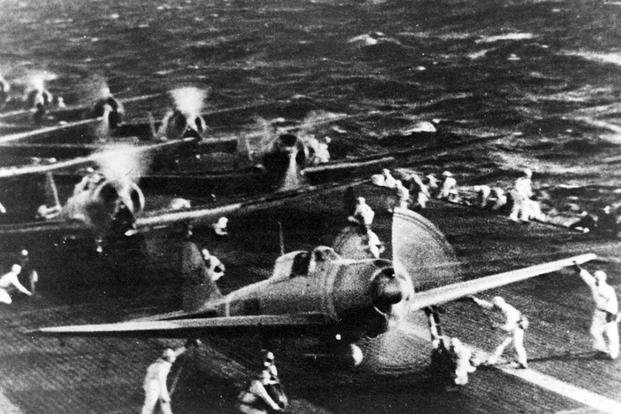
At 7:55 on the morning of December 7, 1941, Japanese horizontal and dive bombers, torpedo planes and fighters began their surprise attack against the United States Navy Pacific Fleet at Pearl Harbor, and Army, Air Force and Navy airfields on Oahu, Hawaii. According to military records, 2403 Americans died in the attack, including 68 civilians, with another 1178 injured. Of the 96 vessels in the Harbor on December 7, the battleships Arizona and Oklahoma, and destroyers Cassin and Downes were destroyed; another fourteen ships were heavily damaged but were later repaired and returned to service. On the air bases of Oahu 347 planes were hit, including 188 lost beyond repair. At the time of the attack, the United States and Japan were in negotiations to preserve peace in the Pacific, making the aggression all the more shocking and unforgiveable to the American public, military and government. At half past noon on December 8, President Franklin D. Roosevelt addressed the nation by radio before a joint session of Congress, asking for a declaration of war against the Empire of Japan, which Congress approved soon after.
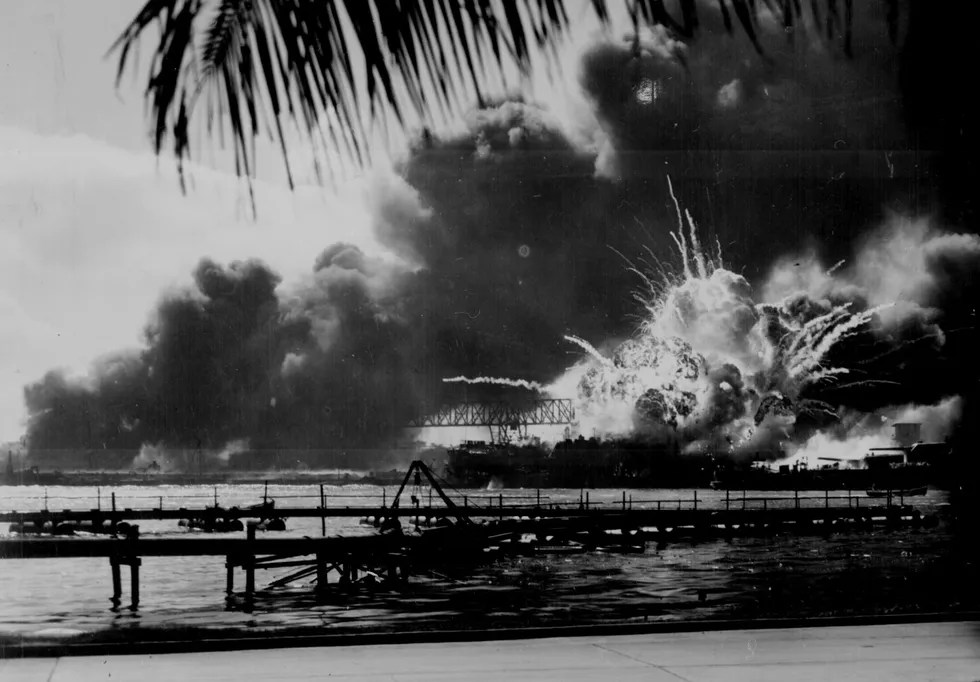
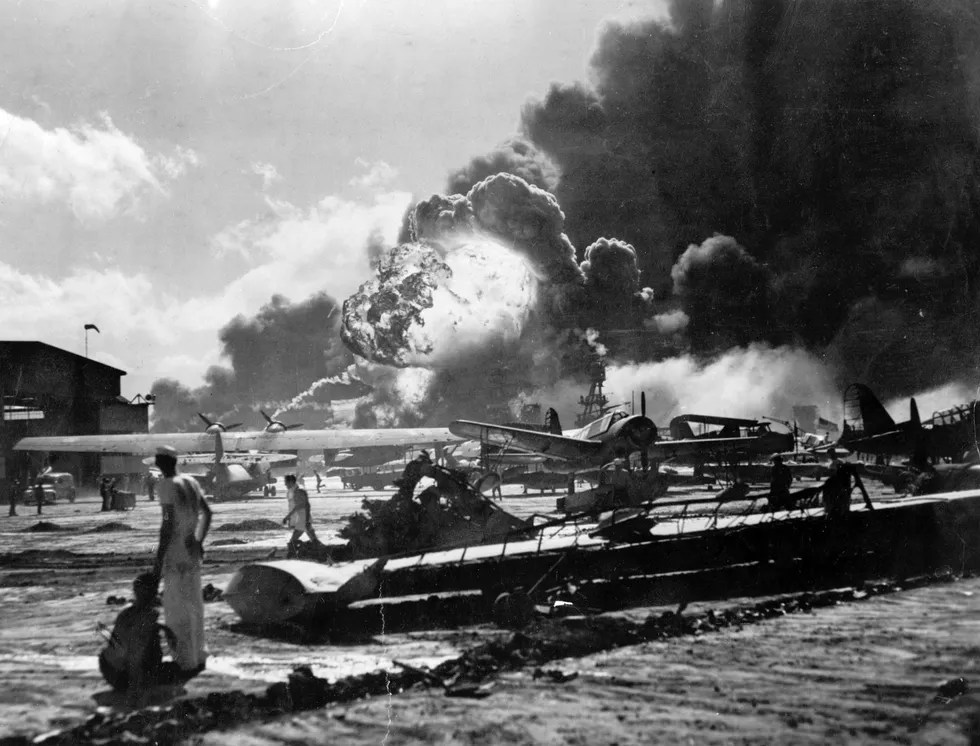
In the weeks following Pearl Harbor Roosevelt met with Army and Naval commanders, including General Henry H. “Hap” Arnold, Chief of Staff of the Army Air Forces. Roosevelt repeatedly expressed his desire for a retaliatory strike against Japan as quickly as possible. Roosevelt believed that a bombing raid on Japan would restore American morale and shatter Japan’s sense of invincibility. Such a raid would require a joint Naval and Air Force effort. Army bombers would have to be transported to striking distance of Japan by a Navy aircraft carrier, then launched from the carrier deck, something that had never been done before. It was not certain that fully loaded bomber aircraft could fit in the narrow runway space of a carrier, or become airborne in 500 feet or less. And landing the airplanes on a carrier was impossible due to the limited space. After the raid was accomplished, where could the bombers go? In late January of 1942, Naval air operations officer Captain Donald B. Duncan was assigned to oversee the Navy’s role in the raid. To solve the many obstacles facing the Army Air Corps, Hap Arnold called upon a longtime friend, Lieutenant Colonel Jimmy Doolittle.
James Harold Doolittle was born in Alameda, California on December 14, 1896. In 1912, after reading an article in Popular Mechanics magazine titled “How to Make a Glider,” Doolittle built his own glider airplane only to destroy it on his first attempt at flight. Doolittle left college in 1917 and joined the U.S. Army Air Service, hoping to become a pilot and see active duty in World War I. He graduated flight school on March 5, 1918 as a second lieutenant, but spent the remaining months of the war as a flight instructor stationed in San Diego. Doolittle continued as an Army instructor into the 1920s, earning a reputation as a talented and innovative pilot, always eager to test the limits of an airplane.
Air shows and air races became more frequent in the 1920s, and Doolittle often flew aerobatic routines at shows, including original stunts he had developed. As airplane designs improved, competition increased between pilots to set new records, to be the “first.” In early September of 1922, Doolittle became the first pilot to fly coast to coast across the United States in less than 24 hours. In late October 1925, Doolittle won the Schneider Marine Cup, a race for seaplanes. In the spring of 1927, Doolittle became the first pilot to fly the difficult and dangerous outside loop maneuver.
In June of 1925 Doolittle had earned a Doctor of Science degree in aeronautical sciences from Massachusetts Institute of Technology. Always interested in improving airplane safety and reliability, Doolittle used his knowledge to improve and design new aircraft navigational instruments. By the end of the 1920s many pilots still relied on visual references for level flight–they had to be able to see the ground and the horizon. Flying into a storm, or at night, often ended in a crash when pilots became disoriented and did not know how to rely on their control panel instruments. During extensive tests with his research team in 1929, eleven additional instruments including a magnetic compass, a directional gyroscope, an artificial horizon, an airspeed indicator and an altimeter, as well as improved radio equipment, were installed in Doolittle’s airplane. On September 24, 1929, a “hood” was placed over Doolittle’s cockpit and he became the first pilot to fly blind by completing a fifteen minute flight and landing safely using instruments only.
In late 1929 Doolittle received a lucrative job offer from the Shell Petroleum Company, but, as a chief test pilot for the Army, Doolittle was hesitant to “miss the opportunity of flying and testing every type of aircraft the Army had or anyone wanted to sell it.” In his autobiography I Could Never Be So Lucky Again he wrote:
“What Shell had in mind for me sounded almost too good to be true. The company had conceived the idea that there was a future for aviation as a means of mass transportation, and decided to get into the business of providing aviation fuel and lubricants in America as it had been doing in Europe. All of the ‘name’ oil companies were hiring well-known pilots at that time to represent their products at air races, by setting records and otherwise getting their respective companies in the news in a favorable way. . . .The offer from the Shell Company was one that I literally couldn’t afford to pass up. Three times the military salary of about $200 a month meant a better life for the Doolittle’s. . . .So my decision was purely economic.”
On February 15, 1930, Doolittle resigned from Army active duty, but accepted a commission as a Major in the U.S. Army Air Corps Reserve. In addition to his salary, Shell purchased a beautiful new Lockheed Vega airplane for Doolittle’s exclusive use. (On May 20-21, 1932, Amelia Earhart flew a Vega solo across the Atlantic Ocean, the first woman to do so).
In early September of 1931 Doolittle won the first ever Bendix Trophy cross-country air race, flying a Laird Super Solution biplane from Burbank, California to Cleveland and then on to Newark, New Jersey in a record time of 11 hours and 11 minutes. Doolittle was asked to compete in the September 1932 Thompson Trophy event of the National Air Races in Cleveland flying a Gee Bee Super Sportster R-1, an exceptionally dangerous new airplane designed and built by the Granville Brothers Aircraft Company in Springfield, Massachusetts. In late August 1932 Doolittle flew to Springfield to have a look at the R-1. In I Could Never Be So Lucky Again he recalled:
“The Granvilles had just completed two new models powered by new Pratt & Whitney 750-horsepower Wasp engines, which they designated the R-1 and R-2. . . .It had been flown only once, by Russell Boardman, but he had aborted the flight because the plane was too dangerous. The vertical fin was so small it was virtually nonexistent. There is no doubt the R-1 was a very directionally unstable airplane, despite the fact that the Granvilles had hurriedly added two square feet to the vertical fin and rudder. . . .
“The red and white plane with the 7-11 dice painted on the side was fascinating to look at. Only 18 feet long from prop to tail, it seemed like it was all engine with a miniscule set of wings and a bomb-like fuselage. The extremely small cockpit sat so far back and was faired into the fuselage just in front of the vertical stabilizer. This was no doubt to counterbalance the weight of the heavy engine. The airplane would be difficult to taxi because the cockpit position provided no straight ahead visibility, and with such a small tail area, the wing would also blank out rudder action until the tail was well up on takeoff. On landing, blanking from the wing would probably mean loss of rudder control at a relatively high speed.
“Recognizing that this airplane would be extremely hot to handle, I knew I had to fly it delicately. I walked around it several times to try to predict what it would do in flight. I climbed in, had the hatch closed from the outside, and warmed up the engine. The engine was obviously extremely powerful and ready to go, so I blasted off and headed for Cleveland. I didn’t even make a turn around the field. I could tell from the first moment that it was a touchy and probably unpredictable airplane.
“I made a conservative approach and landed at Cleveland without difficulty, but I didn’t trust this little monster. It was fast, but flying it was like balancing a pencil or an ice cream cone on the tip of your finger. You couldn’t let your hand off the stick for an instant. . . .”
During four qualifying “speed dashes” on September 3, Doolittle set a new world speed record when he averaged 296.287 miles per hour, with one run clocked at 309.040. Later that day as Doolittle started the engine for the race, “the carburetor backfired; flames suddenly engulfed the cowling and started to spread to the rear. I leaped out and a mechanic and I extinguished the fire. . . .I started it up again and taxied out to the starting line.” Doolittle won the race, setting a new record for the Thompson course of 252.686 miles per hour. The Thompson Trophy included a cash prize of $4500; Doolittle was also awarded the Clifford W. Henderson Trophy for fastest qualifying time, and the Lowell R. Bayles Trophy for the world speed record.
Notoriously unpredictable Gee Bee Racers would claim the lives of several pilots in the 1930s, including one of the Granville brothers. After his Thompson win, Doolittle “flew the Gee Bee back to Springfield the next day. I landed it, taxied up to the line, gratefully got out, and thanked the Granvilles. That airplane was the most dangerous airplane I have ever flown. I was asked many years later why I flew it if it was so dangerous, and the only answer I could think of was, ‘Because it was the fastest airplane in the world at the time’. . . .Flying the Gee Bee in that race had a profound effect on my thinking, especially when I learned that a bunch of newspaper photographers had crowded around Jo and the boys waiting to take pictures of the expressions on their faces if I crashed.” Soon after the Thompson win Doolittle retired from pylon air racing.
Doolittle continued to travel for Shell, performing flight demonstrations of new aircraft, and lobbying for more powerful engines and higher octane fuels as well as changes in government policy after observing the United States was lagging far behind European countries in commercial and military aviation. Doolittle was outspoken in his opinions, and since his days as a flight instructor after World War I had developed a reputation as a daredevil, occasionally finding himself fined or his license temporarily suspended for restricted maneuvers. Doolittle also campaigned against closed-course pylon racing after a series of fatal crashes, but “was not opposed to racing point to point against the clock in passenger and cargo planes;” flying coast to coast in record time for example. In mid-January of 1935, Doolittle did just that by becoming the first pilot to fly from California to New York in less than twelve hours with passengers, one of whom was his wife Josephine.
In mid-August of 1939 Doolittle returned from a tour of Germany, where he had observed the superior Nazi Luftwaffe air forces. Certain that “war was inevitable, that the United States would be involved in hostilities,” Doolittle met with Army Air Corps chief Hap Arnold and offered to leave Shell and return to the service full time. Doolittle had known Arnold since 1918 when Arnold was his commanding officer at the end of World War I. On September 1, Germany invaded Poland–the beginning of World War II. By May of 1940 allied forces in Europe were being overrun by Nazi Germany. President Roosevelt addressed Congress, asking for drastic increases in US defenses and production of airplanes. On July 1, 1940, Doolittle, at age 43, was recalled to active duty by Arnold. In November Major Doolittle,
“was transferred to Detroit as assistant district supervisor and designated Air Corps factory representative at the Ford plant. . . .The job as I saw it was to effect a shotgun marriage between the aircraft industry and the automotive industry. Neither one wanted to get married, but it was necessary in order to meet President Roosevelt’s requirement of 50,000 planes a year. Mass production methods for aircraft had to be found and new perspectives adopted. . . .The aircraft industry thought that if they gave all their know-how to the automotive industry, then when the war ended, they would have developed a new and stronger competitor. The automotive industry felt that in building airplanes they would be doing something that they didn’t know how to do, didn’t want to do, and therefore preferred not to. . . .In time, both industries operated in good faith. . . .In retrospect, the automobile industry eventually did a splendid job building aircraft as well as guns, tanks, and other munitions of war.”
On December 8, 1941, the day after Pearl Harbor, Doolittle delivered a letter to his superiors asking to be transferred to a combat unit. The request was not approved, and Doolittle returned to Detroit until January 2, 1942, when Hap Arnold approved Doolittle’s promotion to Lieutenant Colonel and recalled him to Washington.
In late January Arnold told Doolittle of the plan for a raid on Tokyo in early April, and placed him in charge of the Air Corps role in the raid. The Navy had designated the carrier Hornet as best suited to transport Army bomber aircraft, and Doolittle quickly determined that the North American B-25 was the only bomber that could operate in the limited space of an aircraft carrier. On February 1, two B-25s were hoisted onto the Hornet at Norfolk, Virginia for a trial run. The carrier steamed to sea; the bombers flew from the deck with ease and room to spare, then returned to Norfolk. But these airplanes were not carrying four 500 pound bombs or extra fuel; it was still not certain that fully loaded B-25s could be safely launched from a carrier.
Doolittle designed modifications for the 24 B-25s under his command, including additional fuel tanks, extension bomb shackles, improved armament and bomb racks, and the installation of 16mm cameras in several planes. In early March the airplanes and volunteer five-man crews arrived at Eglin Filed in Florida and began training on short field takeoffs, machine gun operations and low level bombing. Although Doolittle was in charge of planning the mission, he was not scheduled to fly in the raid. In mid-March Doolittle flew to Washington and convinced Arnold to let him pilot the lead B-25 on the Tokyo raid. In late March the B-25s flew to California for final maintenance and loading onto the Hornet on April 1. Ultimately, only sixteen B-25s would be hoisted onto the carrier. At 8:20a.m. on April 18, 1942, approximately 650 miles from the coast of Japan, Doolittle successfully departed the Hornet, followed by his fifteen B-25s and crews. The Raiders bombed industrial and military targets, then, unable to return to the Hornet, flew on to China. Upon his return to Washington on May 18, 1942, Doolittle was met by Hap Arnold. Arnold told Doolittle they were due at the White House and President Roosevelt was to award Doolittle the Medal of Honor for leading the Tokyo Raid. Doolittle protested, saying; “General, that award should be reserved for those who risk their lives trying to save someone else. Every man on our mission took the same risk I did. I don’t think I’m entitled to the Medal of Honor.” In I Could Never Be So Lucky Again Doolittle wrote;
“The President pinned the medal on my shirt and asked me to tell him about the raid, which I did. . . .He said our raid on Japan had had the precise favorable effect on American morale that he had hoped for. . . .On the way through the door Hap congratulated me. I couldn’t resist telling him that while I was grateful, I would spend the rest of my life trying to earn it. I felt then and always will that I accepted the award on behalf of all the boys who were with me on the raid.”
At the time of the attack on Pearl Harbor, Hal Borland was a feature writer for The New York Times Magazine, as well as contributing freelance work to several other popular magazines. On one of his assignments for the Times Borland met Jimmy Doolittle, an experience he recalled in a 1962 article written for a Columbia School of Journalism Anniversary Book, to coincide with Borland receiving the 1962 Columbia Journalism Alumni Award. Borland wrote:

“In the early Spring of 1941 I was sent to Detroit to round up a story for The New York Times Magazine on what the automotive industry was doing in the big drive to equip our armed forces for the desperate World War II campaigns then shaping up. In the three months since Pearl Harbor I had been shuttling from one defense area to another, writing about tanks, planes, machine guns, land mines, artillery shells. Now I was to tie up the Detroit story in one tight package.
“I checked in, laid my lines and went to work, in the face of the most confusing and whimsical censorship I had struck anywhere. The automotive people were cooperative, but the censors seemed to be playing games, not only with me but with each other. I ran down and inspected a brand new anti-aircraft weapon before my censor-guide learned that it was top secret. But he told me of a new, super-fast method of rifling machine gun barrels in another plant. I ran it down, got the details, only to have the censor there wash it out for me and suggest that I look in on a brand new tank factory. I got into the tank plant, going full blast while workmen were still finishing the roof, and watched the first tank assembly line in action, only to have that one scratched too by a hot-stuff censor. I played this game almost a week, finally decided to take what I had, go back to New York, write my story and let the office fight it through Washington for clearance.
“I went back to my hotel, packed to leave that afternoon, and went down to the dining room to have lunch. I had almost finished when an eager-beaver censor who had harried me two days before saw me and came to my table. We had coffee together and he asked how things had gone. I told him, frankly. He laughed. Then he asked, ‘You know Jimmy Doolittle?’
“I said no, I’d never met Doolittle.
” ‘I hear he’s in town.’
” ‘Doing what?’
” ‘Oh, this and that.’ Obviously he didn’t know, but he was playing the same old game I had been caught in all week.
” ‘You know where he is?’ I asked. ‘Or is that hush-hush too?’
” ‘Absolutely.’ He finished his coffee and was about to go when he asked, ‘Been out to the old Graham-Paige plant?’
” ‘I hear it’s empty.’
” ‘Practically empty,’ he said, and added, ‘Good luck with your story.’ Then he left me.
“A few minutes later I took a cab out to the old Graham-Paige place. On the way out I tried to piece the Doolittle story together in my memory. Jimmy Doolittle was one of the best airplane pilots of the era, held a whole slew of speed records and had done a good deal of research in aviation fuel for a big oil company. An outspoken man and a top engineer–he held a doctor’s degree in aviation engineering from M.I.T.–he had been so critical of Air Corps policy that he had been commissioned an active major the previous Summer and thus, it was said, muzzled on top-level orders. He was definitely in the doghouse, had dropped out of the headlines and recently dropped out of sight. I wasn’t in Detroit to interview Major James H. Doolittle, but the chance to do so wasn’t one to pass up.
“The Graham-Paige plant was a huge barn of a place and looked deserted. There wasn’t a guard in sight when I walked in. On the huge main floor were sections of a big bomber, roughly grouped in units, and in a far corner, dwarfed by the huge room itself, stood a B-25. I noticed chalk marks here and there on the floor, which looked as big as an airplane carrier’s deck.
“I found a stairway, climbed it to a long corridor of offices in the second-floor wing. I went down the line of offices, all vacant, dusty and cobwebbed. Then I heard a tap-tap-tap at the far end, came to an open office door and saw a girl at a typewriter. She stood up, surprised, and I asked, ‘Where will I find Major Doolittle?’ Maybe I took her off guard. Anyway, she said, ‘The second door down, the corner office.’
“I left before she could ask questions, went to the second door and knocked. A voice inside growled, ‘Come in.’ I went in and saw a stocky man in a brown tweed suit sitting at a battered desk, all alone in the big office. There wasn’t a rug or a drapery or a map or picture on the wall, nothing but that desk, a straight-backed chair, one small bookcase jammed with books, and the man with a rather sharp nose, a broad jaw, a straight-across mouth, a high brow and close-cropped hair. He was scowling. ‘Who are you?’ he asked sharply.
“I told him my name, said I was from The Times.
” ‘I haven’t got a thing to say,’ he said. ‘And even that’s off the record.’
” ‘You can’t even say why you are here?’
” ‘I’m here on orders,’ he said. Then, with a faint smile, ‘That’s off the record too. Right now, I don’t even exist. Understand?’
” ‘All right,’ I said, ‘you don’t even exist. According to the censors, Detroit doesn’t exist either. They want me to say Detroit is working like hell, winning the war, but not making a plane or a gun or a tank!’
“He smiled at my outburst, then asked, ‘What have you seen?’
“I told him. He listened, nodding from time to time. ‘I haven’t even seen some of that stuff,’ he said. ‘And I’m supposed to be doing a procurement job.’ He got up, walked about the room, a caged man, looked out the grimy window and said, ‘I’ve got a lot of time to think, though.’ Then he turned back to me and asked, ‘You’re not a pilot? Or an engineer?’
” ‘No.’
“He came back and sat on the edge of his desk and talked for fifteen minutes. Mostly about planes, bombers, about load capacity, range, air speed, point of no return. I wasn’t sure what he was talking about but I tried to take mental notes. Finally he said, ‘You’ve got your Detroit story. If you clear it through Washington they may go easy on it. But just remember, I’m not here. I don’t exist.’
” ‘One of these days,’ I said, ‘when they take the wraps off, can I have an interview with you? One I can use?’
” ‘See me a year from today,’ he said, ‘and I’ll talk. For publication.’
“I thanked him, we shook hands and I went back down that long, deserted corridor, down the stairway, through the huge room with the bomber components, and out onto the street. Back at the hotel, out of long habit I made notes of all I could remember that Major Doolittle had said. Then I caught the plane to New York.
“In the office the next morning I reported to Walter Hayward, Assistant Sunday Editor. We discussed the story and he agreed that I should write it at my own discretion and we would see how much Washington would pass. Finally I mentioned that I had seen Jimmy Doolittle out there but couldn’t even mention his name. Walter nodded. ‘They’d probably kill your whole story if you did. They’re very touchy about Doolittle.’
“I went back to my desk. Russell Owen, whose desk was next to mine, had just come in. He asked about the Detroit trip and we damned all censors in unison. Then I said, ‘I saw Jimmy Doolittle out there.’
” ‘So that’s where they’ve hidden him,’ Russell said. Then he asked, with a grin, ‘I suppose you interviewed him?’
” ‘As a matter of fact, I did. But it’s all off the record.’
” ‘What did he say?’
“I found my notes. Russell read them, frowning. He handed them back and said, ‘Either he’s nuts or you are. He didn’t say a damn thing.’ I tore up the notes, started to throw them into the waste basket, then took them to the wash room and flushed them down a toilet.
“I wrote my Detroit story and the Washington censors hardly touched it. It was used as the lead piece in the Magazine for March 30, 1941. Then I went to Fort Monmouth, to Hartford, to Pittsburgh, still covering the war industry circuit. From time to time Russell Owen kidded me, asked, ‘Seen Jimmy Doolittle lately?’ My answer was always the same, ‘Next March.’ It was our private joke.
“March came and passed. Then in April came the word. On April 18, 1942, Lieutenant Colonel James H. Doolittle led a flight of sixteen B-25 bombers off the deck of the aircraft carrier Hornet and flew almost 700 miles to bomb Tokyo, Nagoya and Kobe. Mission accomplished and the planes beyond the point of no return, they flew on into China. It was a spectacular, historic feat, the first time bombers had flown from a carrier. Doolittle was credited with planning it and carrying it out successfully.
“The morning we had word of that sensational strike, Russell Owen came over to me the moment he arrived at the office. He held out his hand in silence. Then we both grinned. ‘And just to think,’ he said deadpan, ‘you had that story all that time.’
” ‘All but the date,’ I said. ‘He was a month late.’ It actually was a year and one month, to the day, after I saw Jimmy Doolittle in the old Graham-Paige plant in Detroit.
“For a long time, in my mellow moments, I told myself that I did have that story a year in advance. But in the candid intervals I admitted the truth. I haven’t the remotest idea what was in those notes, but I’ll lay prohibitive odds that they didn’t even have a hint of that story. It was just one of those coincidences that lie warm in the memory.”
It is a terrific story for sure, but one that cannot possibly be accurate. Borland begins the article by saying, “In the early spring of 1941 I was sent to Detroit to round up a story for The New York Times Magazine on what the automotive industry was doing in the big drive to equip our armed forces. . . .In the three months since Pearl Harbor I had been shuttling from one defense area to another. . . .Now I was to tie up the Detroit story in one tight package.” This, of course, is impossible. Pearl Harbor did not happen until December 7, 1941, more than eight months after Borland was sent to Detroit. Three months after Pearl Harbor would have been March of 1942. The obvious question is maybe this was simply a typo, an honest mistake. In my research on Borland I have seen instances where he did occasionally confuse dates. But I quickly found that this was not a typo. Borland’s Detroit story, titled “Machine Shop for a War of Machines,” appeared in The New York Times Magazine on March 30, 1941. Borland also wrote that the Tokyo Raid “actually was a year and one month, to the day, after I saw Jimmy Doolittle,” which means that Borland met Doolittle on March 18, 1941, months before the attack on Pearl Harbor.
Doolittle was stationed in Detroit from November of 1940 until Hap Arnold recalled him to Washington on January 2, 1942. It seems likely that Borland and Doolittle did in fact meet in March of 1941. But what would their conversation have been? Borland’s recollections of seeing a B-25 and chalk marks the size of an aircraft carrier, of Doolittle talking about “bombers, about load capacity, range, air speed, point of no return,” and “see me a year from today, and I’ll talk for publication,” certainly did not happen. Doolittle would not have been conducting any of these tests in March of 1941 because, again, Pearl Harbor and the Tokyo Raid were still months away.
And what can one make of the final paragraph of Borland’s article? He writes that he did not have “the remotest idea what was in those notes,” and “I’ll lay prohibitive odds that they didn’t even have a hint of that story.” Is he saying that the article is fiction? Is he being modest and trying not to take too much credit for his reporting? It is a baffling piece of work. Editors for the Columbia School of Journalism Anniversary Book apparently had doubts as well–they never published it. Borland’s recollections of Doolittle were written in 1962, twenty-one years after their meeting took place. Although his memory and intention in 1962 seem unclear, the article provides an interesting introduction to the impressive body of work that Borland turned in during World War II.
Borland was hired by The New York Times in early March of 1937, after spending eleven years as an editor and book reviewer for Cyrus Curtis-owned newspapers in Philadelphia, home town of his first wife Helen. (Borland also published four books in the 1930s: Valor: The Story of a Dog, Trouble Valley and Halfway to Timberline under the pseudonym “Ward West,” and Wapiti Pete). Borland had hoped to leave the newspaper business the previous year. In a February 6, 1935 letter to his soon-to-be agent, Borland wrote, “I figure on cutting loose from the newspaper job in the spring of 1936 and free-lancing entirely, if at all possible.” Instead, Borland joined the staff of Lester Markel, Sunday Editor for the Times. One of Borland’s earliest nature-themed pieces for the Times originated in memos exchanged between an assistant editor and Markel in November of 1938. An article was proposed on “animals that are left in industrialized America and what they do for a living.” Markel responded, “A rather nice idea this. John Kieran won’t take it on; who might?”. . . .”I learn that Borland is a nature expert. How about trying him?”. . . .”By all means, let’s try Borland.” Among his other early work for the Sunday Times Magazine, Borland contributed lengthy cover features on the 1939 and 1940 World’s Fairs as well as a February 2, 1940 article on the Amish community in Pennsylvania, while his article “Builders Three, My Boys and Me” appeared in Better Homes & Gardens magazine in November of 1940. Borland also began his “About” column for the Times, featuring informational anecdotes on a variety of topics. And Borland continued submitting short stories to magazines, including “Song of a Man,” published in The American Magazine in September 1939. In 1963, Borland would expand this story into his best-selling novel When the Legends Die.
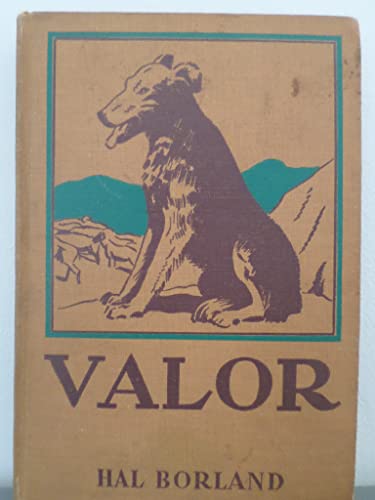


On October 8, 1941, Borland’s short nature piece “Oak For English Hearts” appeared in the Sunday Times. This would be the first of what Borland called his weekly “nature editorials,” 275-word essays that were published at the foot of the Sunday editorial page without a byline but readers knew were written by Borland. Borland continued to write them for the remainder of his life; editorial #1721 ran on December 30, 1973, #1868 in January 1977. His final editorial–over 1900 in all–was published on February 21, 1978, the day before his death. The editorials were immensely popular, with Borland often receiving as many as 3,000 letters a year from readers. Borland typically wrote the essays on Tuesday, revising them several times until he was satisfied he had captured his intent in the compact span of 275 words: “I have two gauges for them–they must read well aloud–on that I am somewhat fanatic; and they must be accurate when they deal with technical matters, absolutely accurate. Beyond that, I try to avoid sentimentality, though I do approve of sentiment and emotion.” But Borland was also well aware that the editorials were only one element of his work. In an August 27, 1956 Author’s Biographical Questionnaire, submitted to his publisher for promotion of his book High, Wide and Lonesome, Borland wrote:
“I’d rather not present myself as a newspaperman or even primarily as an ex-newspaperman. I am not a newspaperman who wrote a book. I’m a writer who once worked for the newspapers. The weekly pieces I do for The Times are a minor part of my work, though I know that they must have a place in presenting this particular book, since they are an approach to a good many readers.”
(Ironically, many readers of Borland know, and knew, him primarily from his Sunday editorials and the three collections of them published in book form: An American Year, Sundial of the Seasons, and Twelve Moons of the Year. I am often surprised at how few Borland fans are aware of his extensive newspaper and magazine work, and are familiar with less than a dozen of his 36 published books).
In response to the attack on Pearl Harbor Borland wrote the long, patriotic poem “America is Americans” for the Sunday Times Magazine. The poem was published on December 21, 1941 and received an immediate and overwhelmingly positive reaction from readers. Over the next few months Borland wrote several more war poems for the Times and The Saturday Evening Post, including “Creed” and “Mission at Legaspi.” Scripted dramatizations of “America is Americans” and “Creed” were performed in 1942. A collection of Borland’s war poetry was published in book form in the fall of 1942 under the title America is Americans. Selections from the book were widely reprinted in anthologies and read at public events throughout the war. Borland recalled that “Creed” was “read over the air on a national network, NBC as I recall, the night Franklin Roosevelt died, as a tribute to him.”
Borland’s article “The Enemy Within,” on the dangers of enemy spies and saboteurs working in U.S. factories, was published in the Times in February of 1942. As his war poetry became popular on radio, Borland found himself in demand for more radio work:
“For a time in the spring of 1942 I was loaned by the Times to the Government to write scripts for the radio program ‘Keep ’em Rolling,’ put on by the Office For Emergency Management, MC’ed by Clifton Fadiman. A thankless job, but a look at radio and its peculiar people. . . .a series of programs of information and entertainment. . . .our entertainment is made up of song and drama dedicated to what we in America are fighting for and why; our information is an effort to answer the question that is uppermost in everyone’s mind these days–‘what can I do to help in this fight?’ “
Programs aired Sunday nights from 10:30 to 11:00. Each program began with the announcer exclaiming “Remember Pearl Harbor!” followed by the sound effect “roar of machinery” going to war, and the announcer pleading “Keep ’em Rolling!”
Borland resigned the Times in the summer of 1943 to freelance: “Several magazines wanted me to write for them. I left the Times with the understanding that I would continue on a semi-staff basis, accepting magazine assignments and other work as I pleased. . . .After I left the Times I did correspondence of various kinds for Popular Science Monthly, The Saturday Evening Post, and a dozen other magazines. Quite a bit of work for This Week mag; many others, general reporting as well as essays, usually on some nature phase. A number of pieces for Holiday, several for Reader’s Digest.” In his November 1943 Times article “Home Town Makes Good,” Borland revisited Flagler, Colorado, reporting on the changes made since he lived there in the late teens and early 1920s, and the young men of Flagler serving in the war. The January 1944 issue of Popular Science Monthly featured an in-depth Borland article on the intricate system of Nazi defenses constructed throughout occupied Europe–deadly barriers the allies would have to cross before reaching “Hitler’s Inner Fortress, where the decisive battles will be fought and the war will be won.” Borland also scripted film documentaries on Navajo Indians, nature and geology, and continued writing short fiction, including his story “Beaver,” published in 1944 in the Avon Modern Short Story Monthly alongside stories by Ernest Hemingway, John Steinbeck, Max Brand and Kay Boyle.

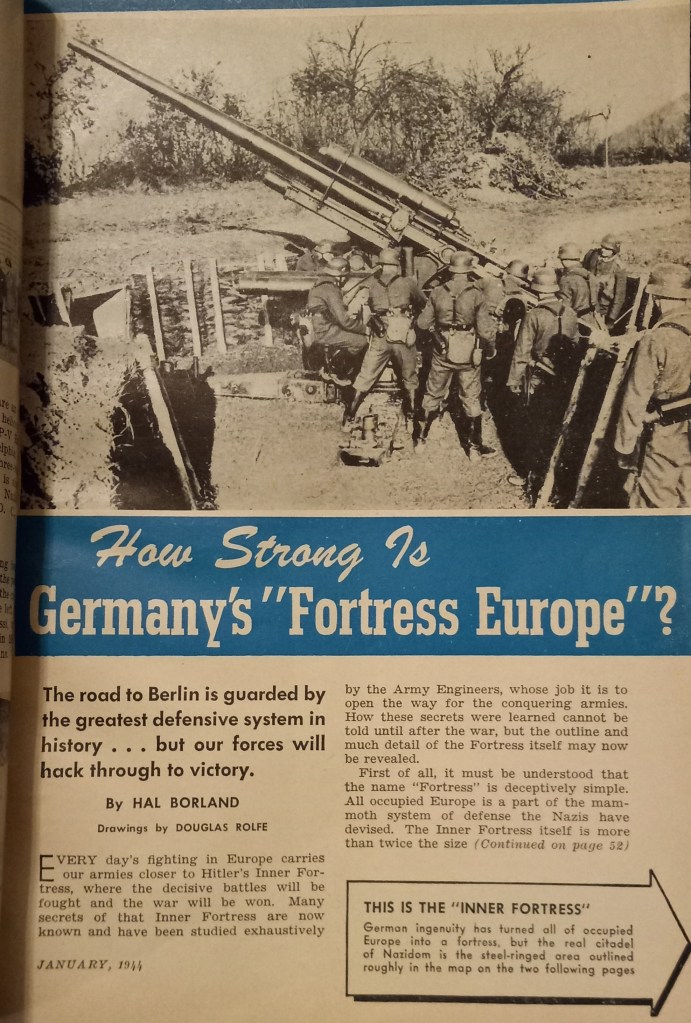
Borland endured personal tragedy in the 1940s; his wife Helen died on October 29, 1944 after having brain surgery. During the summer and early fall of 1945, Borland took an extended break from New York and traveled across the country researching an idea he had for an article on the American spirit at the end of World War II. During this trip, Borland and his second wife, also a writer named Barbara Dodge, were married in Denver. The Borland’s returned to his home in Stamford, CT, where he wrote his article, “Sweet Land of Liberty.” It begins; “I have just returned from four months in America. Four months and 12,000 miles, re-examining and renewing contact with the fruitful hills and valleys and plains and valleys, the farmers and tradesmen, the store keepers and school teachers and loggers and factory hands of these United States.” Borland then reports his observations of a country of contrasts:
“I have seen such plenty as no European, no Asiatic ever dreamed of. Ripening corn fields that seem to fill the whole of midland America. A wheat harvest so huge there were not enough granaries and elevators and freight cars to hold it all, and it spilled over in mammoth piles along the railroad sidings. Timber sufficiently to decently house every American and have enough left over to rebuild most of Europe. Steel and copper and aluminum pouring from smelters and blast furnaces and rolling mills in a stream surpassing the combined production of all the rest of the world. . . .Nearly 140,000,000 Americans, men and women at work, producing such plenty as no other land on earth ever knew. . . .And now I have come back to an Atlantic coastland so tense, so full of fears and doubts and wonderings about the future. . . .that it jumps half out of its skin at the touch of an unfamiliar hand or the sound of an unfamiliar voice. . . .Any metropolitan center fancies itself as supersensitive to new trends, new movements, new ideas, and New York likes to believe it is super-supersensitive. But the great bulk of America, and of the American people, lies not only west of the Hudson but west of the Alleghenies. For that matter, go fifty miles from New York in any direction and you begin to feel a wholly different pulse, a pulse much nearer the beat of the American pulse as a whole. . . .The heart of America is sound. The body is strong. The mind is sane, and the eyes are clear.”
“Sweet Land of Liberty” was published in The Saturday Evening Post on December 22, 1945. Nine days later, on December 31, Borland’s youngest son passed away at the age of sixteen. (A heart attack would claim the life of Borland’s oldest son in March of 1963, at the age of 38).
After the war, Borland continued his freelance work and spent a good part of the late 1940s and early 1950s collaborating with Barbara on magazine fiction, a popular genre at the time. It was a productive and joyful period for Borland. In an August 1946 letter to a friend he wrote, “Much has happened since I saw you. After two deaths in my family, I remarried a year ago and we bought a couple of acres up here (Farms Road in Stamford, CT), delightfully rural and ideal for two writers who at last have found that love and happiness are real.” As the fiction market cooled in the mid-50s, Borland turned his full-time attention to writing books; between 1956 and his death in 1978 Borland completed 29 books. But he never fully left the magazine or newspaper business. Borland was a regular contributor to Audubon, Better Homes & Gardens, The Progressive, and American Heritage magazines, among others, wrote as many as 500 book reviews a year for Harpers and The Saturday Review, and for many years wrote weekly columns for The Berkshire Eagle and The Pittsburgh Press newspapers. Not surprising, given that Borland had been a newsman since the age of fifteen when his endlessly talented father taught him the newspaper trade.

Copyright 2025. Kevin Godburn. All Rights Reserved
When Did Hal Borland First See The Rockies?
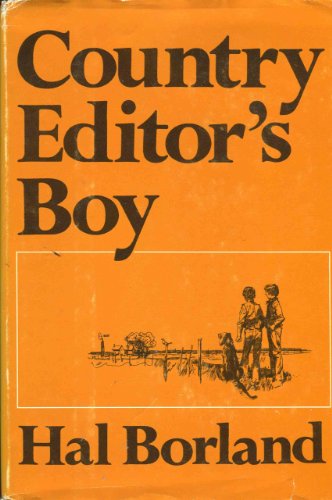
In his 1970 memoir Country Editor’s Boy, Hal Borland recalled the first time he saw Denver and the Rocky Mountains in June of 1915. The Borland’s had left their remote homestead on the plains of Eastern Colorado the previous summer and moved north to Brush, where Borland’s father, Will, worked a year at The Brush Tribune. In early spring, Will left the Tribune and purchased The Flagler News, a weekly newspaper in the plains town of Flagler, just over ninety miles southeast of Brush. Will traveled to Flagler alone, secured the paper and housing, and fifteen-year-old Borland and his mother Sarah followed six weeks later. Direct rail service between Brush and Flagler did not yet exist in 1915; one traveled ninety miles southwest to Denver, then 125 miles southeast back to Flagler. It was on this move to Flagler, during their wait in Denver, that Borland first saw the mountains. In Country Editor’s Boy he wrote:
“Although we had lived in Colorado five years, neither mother nor I had ever seen Denver. . .We started back to the station. We were almost there when mother stopped, caught my arm, and exclaimed, ‘Look!’ Off to the west, in a gap between two tall buildings, was the incredible loom of the mountains twenty miles away. They were huge, bare and rocky. Beyond them rose other mountains, dark and green with trees, countless mountains. We stared at them, fascinated, and we turned down a side street and walked two or three blocks to a place where we could see them better. The sun shone on them, almost glinting, and big, high clouds cast dark shadows that climbed their slopes as we watched. They looked only a few miles away in the clear, thin Colorado air. Seeing them, I knew that someday I would have to go to them, climb them, see what lay beyond. But not now. Now they were a barrier, a rugged obstacle to eyes familiar with the flat immensity of the plains. . .I wanted no part of such barriers, no hemming in. I was glad we weren’t moving to a town in the mountains. Flagler was a plains town where, father had written, you could see forty miles in any direction.”
This was not the first time Borland had written about the Rockies. In his 1956 book High, Wide and Lonesome, Borland recounted the homestead years 1910 to 1914. Will and Sarah Clinaberg were married in Sterling, Nebraska on April 26, 1899, where Harold Glen (Borland did not adopt the name “Hal” until the 1920’s) was born on May 14, 1900. In February of 1910, Will–an exceptionally talented newspaper printer and editor–left his position at The Sterling Sun and filed his homestead claim on the dry, treeless grassland plains of Eastern Colorado. The Borland’s built a “soddy” on their claim, two miles from the nearest neighbor and nearly thirty miles from the closest doctor in Brush.
After a difficult year that exhausted their supply of food and cash, Will took a temporary position editing a newspaper in the mountains at Pagosa Springs during the summer and fall of 1911. He would travel by train from Brush to Denver and then on to Pagosa, telling Sarah, “I’ll go Monday and you two can come later.” But Sarah was insistent that she and Harold stay and tend the homestead and Will travel to Pagosa alone. In High, Wide and Lonesome Borland wrote:
“I thought: We can’t move to some closed-in town where you can’t see anything or do anything! . . .I felt a big relief. We weren’t going. Father was going, but he would be back this fall. He was saying, ‘All we need is a little cash. Just enough to get us over the hump this summer. Get some food in the house for next winter, and some coal. And maybe even buy another cow or two. That’s all we need. And this is the chance to get it.’ That night mother washed his shirts and sewed his buttons, and on Monday morning we took him to Brush and he got on the train to Denver and the mountains.”
Over the next thirty pages of High, Wide and Lonesome, Borland recalls his and Sarah’s experiences on the homestead while Will was away at Pagosa. Throughout the book, Borland mentions climbing the haystack and sand hills, searching the horizon for the mountains, out of view far to the west. But convincing evidence from Borland himself tells a different story–that he did in fact visit Pagosa in 1911, thereby rendering both published accounts inaccurate.
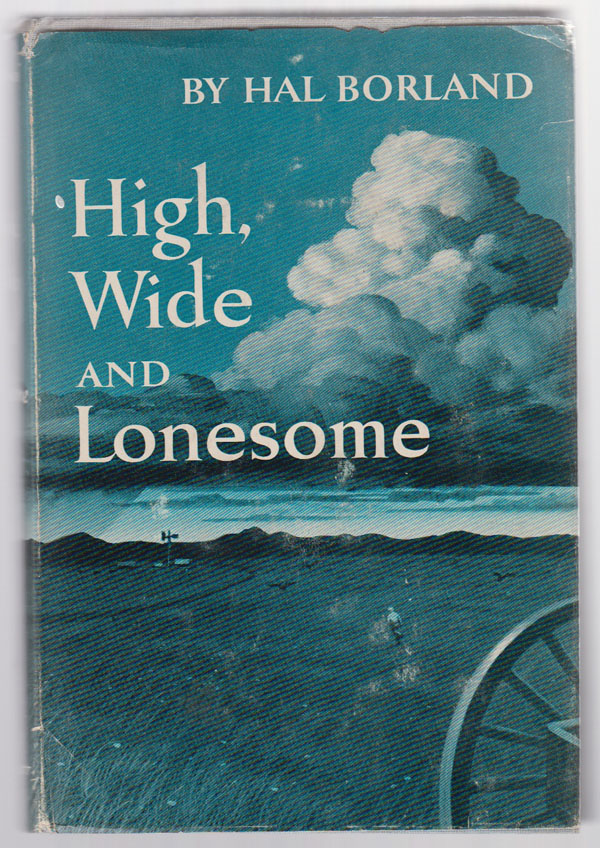
In November of 1953 Borland received a letter from a journalism student at the University of Colorado. The student had chosen Borland as the topic for his senior “independent study” project and wondered if Borland would supply some biographical information. Borland responded with a seven page, single-spaced letter giving a detailed account of his life and career thus far. In his letter Borland wrote:
“During the summer of 1911 my father spent several months at Pagosa Springs, editing the Sun there for a political campaign; during that time I roamed the hills and became acquainted, as a boy will, with old miners, loggers, and Ute Indians, learned a smattering of Ute, hunted a bit and fished a bit with them, learned something of the way they lived. All factors in things I later wrote.”
Two years before the student letter, Borland’s article Lost Retreat was published in The New York Times. Lost Retreat is Borland’s account of his dream to build a cabin high in the mountains above Pagosa Springs, a retreat where he could fish and write, where “One could live here in simplicity, work as one wished, be isolated when one wanted isolation, or go out from here into the busy, fretful world. . .What better life could one ask than to live here in these mountains and fish and write books.” Borland had chosen the site for his cabin during a trip to Pagosa Springs after his marriage and graduation from Columbia School of Journalism in June of 1923, camping in the mountains and completing his first book, Rocky Mountain Tipi Tales. In Lost Retreat Borland mentions the 1911 trip as inspiration for returning there in 1923:
“I had known Pagosa briefly as a boy, when I came here with my father to fish for trout in the swift white waters of the upper San Juan River. I came back here in the 1920’s to write a book about the legends and folklore of the Indians. . .I came here and wrote my book, and when it was completed I loaded a pack horse and went back into the mountains to fish. The fishing was good, and the mountains were wonderful with summer. I was returning from that trip when I found my retreat.”
Borland left soon after to take a job “back east,” and did not return to Pagosa until 1951, hoping to find his lost retreat:
“I drove out of Pagosa on the asphalt road. . .looking for my hilltop. I found it with little trouble. A side road, unpaved but of well-graded gravel, leads off into the hills. I followed it, and parked my car, and walked a quarter of a mile, and there I was. . .My hilltop was no longer remote. . .I walked about that high meadow looking in vain for a mariposa lily. It was several minutes before I remembered that the mariposas, which are like a vivid, three-petaled tulip, must have finished blooming a month or more ago. Then I realized that I had been trying to recapture something that is gone forever. Like the mariposas, my dream of a retreat up here bloomed in its proper season and was now gone.”
Perhaps most telling is a December 1962 letter Borland wrote to his editor, in which he recalled a trip he and wife Barbara had made to Mesa Verde National Park in the early 1950’s:
“Mesa Verde is not far beyond Pagosa Springs, so we stopped in Pagosa and I saw several old friends there, talked of the old days. In my youth I spent some time there and knew some of the old Utes, even went with one small group of them on a fishing and berrying trip back in the hills. I recalled this to Barbara and told her about the old tales the Utes told me and the old chants they sang around the fire in the evenings. We saw Pagosa and drove on through Piedra Town and Bayfield, with the Southern Ute reservation just off to the south, and went on to Cortez, Colo., and into the park and up the Mesa.”
And in a November 1964 letter to Peter Farb, Borland stated definitively, “I spent the better part of a year in Pagosa Springs in my boyhood and have been back several times.” I also have an author bio Borland gave to his publisher, as well as additional correspondence, where he references 1911. Though these examples are somewhat vague on the exact length of his stay, there is no question that Harold (and certainly Sarah as well) visited his father in Pagosa during the summer and fall of 1911, and it is unlikely he traveled any route other than by way of Denver. Why, then, did Borland give alternate accounts in High, Wide and Lonesome and Country Editor’s Boy? Are the events he details in the thirty pages of High, Wide and Lonesome fact or fiction, or a combination of the two?
Copyright 2022 Kevin Godburn All Rights Reserved
Will W.–Grandfather Borland
Will Borland was not a man to wait for opportunity to come his way. Though less than five foot eight, he was a tough 200 pounds with dark hair and mustache and determined facial features–a rugged and restless son of the American Frontier. Will’s ancestors migrated from Scotland and settled in New York State shortly before the Revolutionary War. After the war, the family moved to the wilderness of western Pennsylvania, then farther west to Hardin County, Ohio, where Will (William Wallace Borland) was born on February 2, 1837. Will’s father and mother eventually packed their small children and few belongings and pushed even further west into Indiana, settling near Lafayette.
When Will was a youngster, he accidentally jabbed the point of his father’s knife into his right eye while whittling. The accident left him blind in that eye as well as scarred, but did not prevent him from becoming an expert left-handed rifle shot. (It also did not stop him, years later, from trying to enlist in the Union Army during the Civil War, though he ultimately was not allowed to serve). Will learned early the necessity, and the rewards, of hard work on the expanding western frontier. The Borland’s cleared and farmed their land, and by his late teens Will was an experienced farmer as well as a highly skilled blacksmith, carpenter and wagon maker. Will set up his own blacksmith shop and quickly established himself as a respected craftsman and successful businessman.
In 1860, twenty-three-year-old Will married Deborah A. Sexton, the eldest daughter of a family from Lafayette, and children followed soon after. Will had inherited his father’s and grandfather’s pioneer spirit, as well as a fearless ability to recognize and seize upon new opportunities. In 1866, inspired by the thriving Homestead Act of 1862, Will and Deborah and their young family joined a wagon train and traveled west across Illinois and Iowa into the Nebraska Territory, filing a claim in Johnson County in the small agricultural community of Vesta, which at the time consisted of only ten families. Will’s father (Will Sr.) and brothers John and Christopher were also part of the wagon train and took homesteads nearby. Will cleared his land and built a home, and for the next six years farmed and raised stock. Children continued to arrive every other year.
By 1872 Will had outgrown the quiet village of Vesta. He sold his claim and moved northwest, filing a claim on a new homestead in the larger town of Sterling on the Nemaha River. Once again he cleared his land and built a home, along with a dam and water wheel to harness the energy of the river. He built a grist mill and forge and opened his blacksmith and carpentry shop. Will became a community leader, joining local civic groups and taking an active role in the development of Sterling. His brother John also moved to Sterling, and contributed by becoming a school teacher and serving as town clerk.

At the time of the move to Sterling the family had grown to six children, two boys and four girls. The oldest were now big enough to take on farming and household chores and help Will in the busy shop, which was often a dangerous place to be. Will was endlessly over-confident in his ability and strength, a fault which led to some careless and painful accidents. Once, while trying to shoe a particularly violent Percheron Stallion, he attempted to hold the horse’s hind hoof between his knees rather than subdue the hostile animal with a twitch–a leather harness attached to a pole that is placed over the horse’s nose then twisted and tightened. Will managed to nail on one shoe, but as he grabbed the other hoof the stallion lunged free and kicked him headfirst into the wall of the shop, which splintered from the impact. An enraged Will jumped up, grabbed a wagon spoke leaning near the door, and knocked the raging stallion to the ground with one blow to the head. Before the dazed animal could recover, Will tacked the remaining shoe onto the trembling hoof.
Will took pride in his shop and tools, which were always perfectly maintained and razor sharp. Will was a master carpenter and craftsman who could build a covered wagon with no drawings to guide him. One day he was cutting away on a slab of hickory hardwood with a short-handled axe, forming a new spoke for a wagon wheel, while his 10-year-old son stood close by. Will expertly worked the axe and wood but had failed to notice a knot in the grain. The axe glanced off the wood and cut deep into his left wrist, nearly amputating the hand. Will quickly grabbed up the severely injured and gushing left hand with his right, holding it tightly against the wrist. As his terrified son looked on, Will cussed and stormed furious out of the shop. He headed toward the doctor’s office two blocks away, taking care to walk in the dirt of the street rather than on the wooden sidewalk because he knew the women of Sterling did not like to pass along a bloody sidewalk. Without the aid of anesthetics, the doctor sewed the severed veins and tendons back together, stitched the hand and wrist, then set the hand with a splint and bandages. After leaving the doctor’s office, Will hurried to the saloon where he hastily downed several shots of whiskey to ease the stabbing pain. When the bartender asked him what was wrong Will roared, “I cut my damn hand off and the doctor just finished sewing it back on!”
Will was back in the shop later that same day, doing what he could with his good hand while his sons helped with the more difficult jobs. The wrist gradually healed, but because of the shortened tendons Will was never again able to fully open the hand. He could open it enough to manage his tools, though, and once fully healed he could lift an anvil with the damaged left hand. Life returned to normal, and his sons began to notice that when work in the shop was slow, Will would busy himself with some small, secretive project that he carefully kept hidden from them whenever they entered the shop.
At age 35, Deborah became pregnant with her seventh child. The hardships of frontier life and births of six children had taken their toll, and she was aged well beyond her years. Though the seventh birth (a daughter) was not unusually difficult, Deborah was physically drained and her recovery was slow. For nearly two months the oldest daughter, Rose, took over the household chores while Deborah remained in bed. Will was shaken by his wife’s poor condition, but gradually she improved and was strong enough to manage the household again.
For the next several months Deborah seemed fine. Then, unexpectedly, early in the winter of 1873, Will came home and found Deborah in bed with what appeared to be a bad cold. She had him soak a rag in turpentine and prepare a mustard plaster for her chest, just as she had done for Will many times before. But they had no effect and she coughed violently throughout the night. By morning, Deborah had an intense fever and knew that her time was short. She called for Will repeatedly during the day, whispering to him, “I did my best, the Lord must understand,” and telling him to “find someone who will be good to the children.” On the second day she called again for Will but did not recognize him when he came, and could not see or feel him holding her hand. She said faintly, “He will hear my voice and come, he always did,” then she quietly died.
The family suffered through the winter, their loss made worse by unusually biting cold and heavy snow, and by the spring of 1874 Will knew he had to act. Leaving Rose to care for the household and his sons to tend the shop, Will set out for Indiana. Within six weeks he was back at the Nebraska homestead with a new wife–Deborah’s youngest sister Angeline. “Anna” was tall and slender with a narrow face and large nose and bitterly sarcastic tongue. She was only 22, far younger than Will and not particularly fond of the outdoors, but she managed to ease into her new role as wife and mother. Her nieces and nephews, who were now her stepchildren as well, seemed to adjust to the change with little difficulty.
Will and Anna would go on to have nine children together. Hal Borland’s father, William Arthur Borland, was the third son of Will and Anna, born on May 13, 1878. All of Will’s sixteen children inherited his determination and willingness to work and lived full and productive lives. When the town of Sterling incorporated on July 8, 1876, Will was among the town’s first elected Board of Trustees. Will continued to run his shop until his death at age 59, on August 25, 1896. Angeline passed away in 1922. After Will died, the boys were going through his desk at the shop and discovered what he had been secretly working on in his spare time for so many years. Inside a cardboard box they found a collection of miniature horseshoes, all the size of a quarter, and each one brightly polished and rendered in perfect detail.

William W. passed away four years before Hal (Harold) Borland’s birth, but Anna and the Clinaberg’s (parents of Harold’s mother) survived into the second and third decades of the 20th-century. In his article “The Plenty of the Land,” published in the November-December 1967 issue of Audubon magazine, Hal Borland paid tribute to his beloved Grandma and Grandpa Clinaberg, and presented two very different portraits of his grandmothers, Borland and Clinaberg:
“There were two grandmothers, but the other one was a widow–starchy, reserved and critical. She distrusted sunlight, which faded her carpets. She insisted nature belonged outdoors, and didn’t think much of it even there. When I visited her I sat on the edge of a chair and silently hated the world. She was Grandmother, capitalized, formal.
“Grandma, on the other hand, was slippery elm bark and cherry-sap gum, dandelion greens and sassafras tea. I think of her every time I smell black walnut hulls; which is one reason we go out every autumn, here in our Connecticut Berkshires, and gather a few pecks of butternuts and hickory nuts, and try to beat the squirrels to a few handfuls of hazelnuts, though we seldom succeed.
“I am sure Grandma was a slapdash housekeeper, and as a cook she fried her meat and boiled the life out of her vegetables. She was a tyrant in many ways, and when she was ‘on the prod’ even the hogs stopped grunting. But she was of the land and partner with it. . . .She was full of frontier skills and old-time lore. . . .a kind of pioneer matriarch who at times seemed to be trying to perpetuate her frontier girlhood in a twentieth-century urban setting.”
In “The Plenty of the Land,” Borland recalled his boyhood visits to the Clinaberg farm in Tecumseh, the skills he learned, and the profound influence they had on his future:
“We usually went to Grandma’s for Thanksgiving, sometimes for Christmas. And every summer I spent at least a week there, sometimes two. Whenever I went, I became a part of Grandma’s work force. Grandpa was the only member of the household who wasn’t a daily part of her crew. He harnessed his horses and was gone right after breakfast and didn’t come back till suppertime.
“Practically everything on that table came from Grandma’s own domain. I had a hand in the growing or harvest of most of them. I helped feed the turkey, helped pick the sage in the stuffing. I picked potato bugs off the vines in the back lot where those creamy mashed potatoes grew, fed bran to brindled Daisy whose milk produced the cream and butter. I kicked over the tops of the onions to make them bulb. . . .I picked apples, shelled walnuts, pressed cider that went into the mincemeat. I picked my full share of the wild strawberries in the jam and the chokecherries in the jelly.
“And that is why we go out and gather a few pecks of nuts every fall–to participate directly in that plenty, to help ourselves. That is why we live on the land.”
And in a previously unpublished family remembrance, Borland described Will and Anna:
“There was Grandfather Borland, whom I remember only from a framed photographic enlargement that once hung on a wall, the picture of a stern man with dark hair and a firm chin and an ample nose and a dark mustache, not huge but ample. . . .He was short and stocky, a tough thewed man.”
“She hadn’t been overly endowed to start with, for she was the tall, stringy type, as she said, with a long, bony face and a long nose. She had looked thirty when she was 22, and she looked 35 now that she was 40. She never, to the end of her days, looked a day over 45, and she lived to be almost eighty.”
Copyright 2014 Kevin Godburn All Rights Reserved
Remembering David McCullough

The world lost one of its finest historians when David McCullough passed away on August 7, 2022. Early in his career, McCullough served several years as editor at American Heritage. In January of 1968 McCullough wrote Hal Borland:
“I am writing to ask if you would have time to talk with me about a new series of books which American Heritage will soon begin publishing. . .My hope is that I can interest you in being the author of one of those books, or if not that, to get your advice on subjects which the series might take up, and possible approaches to those subjects. . .Charlton Ogburn, Jr. has written on the geologic history of North America; Ritchie Calder has done the evolution of the machine; and Lee Edson is writing on the solar system and the “new astronomy”. . .The books will run in the neighborhood of 40,000 words and are meant for the intelligent (and interested) layman.”
Borland and McCullough spoke by phone soon after and McCullough suggested a book on birds as a possible subject, while Borland expressed a tentative interest in writing a volume on plants. But four days later Borland wrote McCullough:
“It was good talking to you. I promised to let you know within a week or ten days whether I was prepared to sit down and discuss the proposal in more detail. I now find that I prefer to finish the book I am now working on before I get involved in anything else. That will be June or July, if all goes according to schedule. If you are still interested then, and if the proposal still seems to have possibilities that interest me, perhaps we can get together. Meanwhile, of course, the bird book idea you suggested is yours to do with as you wish, and the plant idea I suggested is mine. . .Actually, my decision would hinge on three basic questions. . .They are, money, editorial leeway and credit, and subsequent control of and rights to the material.”
The two spoke again in the spring of 1969 when Borland agreed to write a 2,000 word article on 18th-century botanists John and William Bartram for American Heritage magazine. McCullough offered a payment of $600, and mentioned Borland was free to go beyond the 2000 word limit if need be. He invited Borland to New York for a visit to talk about possible future projects. Borland responded:
“Not much chance of my being in New York in the foreseeable future. It’s trying to be spring here, and all my senses resent the city anyway. As long as the phone works and the mail gets through I’ll stay here. If you want to come up some fine day, you will be welcome. . .I’ll go along with that $600 this time, knowing damn well it won’t make American Heritage go into bankruptcy. If there is a next time we’ll renegotiate, though.”
Borland delivered his article, The Memorable Bartrams, to American Heritage in late May of 1969, the final draft running 2500 words. McCullough wrote Borland in late July that, “Everyone here likes the piece. The one criticism seems to be that it is too short which, of course, is my fault since you kept it to the length I asked for. So I wonder if you would be willing to add another 500 to 800 words or so for which I could offer a supplementary payment of $200.”
Borland sent a terse response:
“What you suggest, another 500 to 800 words describing a Bartram trip, can be done, of course. It does involve going back to the research, then weaving the new material into the script, a job I think you will agree is not done with the left hand or before mid-morning coffee break. I refuse to haggle over money, but frankly, the $200 additional would only bring the original price up close to the “competitive price” you said you would pay, with nothing left over for the re-do and extra material. What you are doing is changing the assignment after the piece was written one way. As a writer, you know this as well as I do.”
Borland suggested McCullough give him a call and they could work the matter out by phone. The two did talk, but the article remained unpublished for more than five years. The Memorable Bartrams finally appeared in the April 1975 issue of American Heritage, by which time McCullough had moved on and Borland “had almost forgotten that I wrote it.”
Hal and Barbara Borland– Flagler, Colorado, 1970
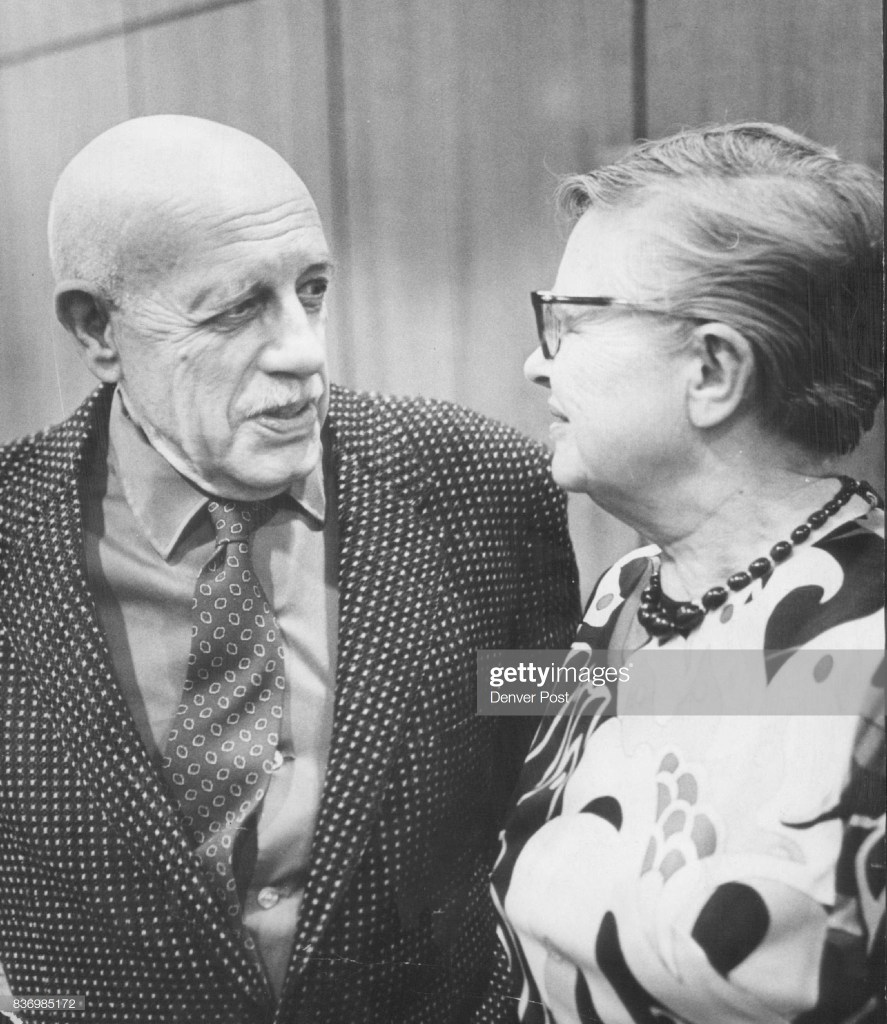
From the Denver Post, April of 1970. Hal and Barbara Borland were in Flagler for the town’s celebration of the release of Country Editor’s Boy, Borland’s memoir of his years in Flagler, 1915-1918.
The Coloradoan Yearbook Title Page, 1920
University of Colorado Yearbook Photo 1920
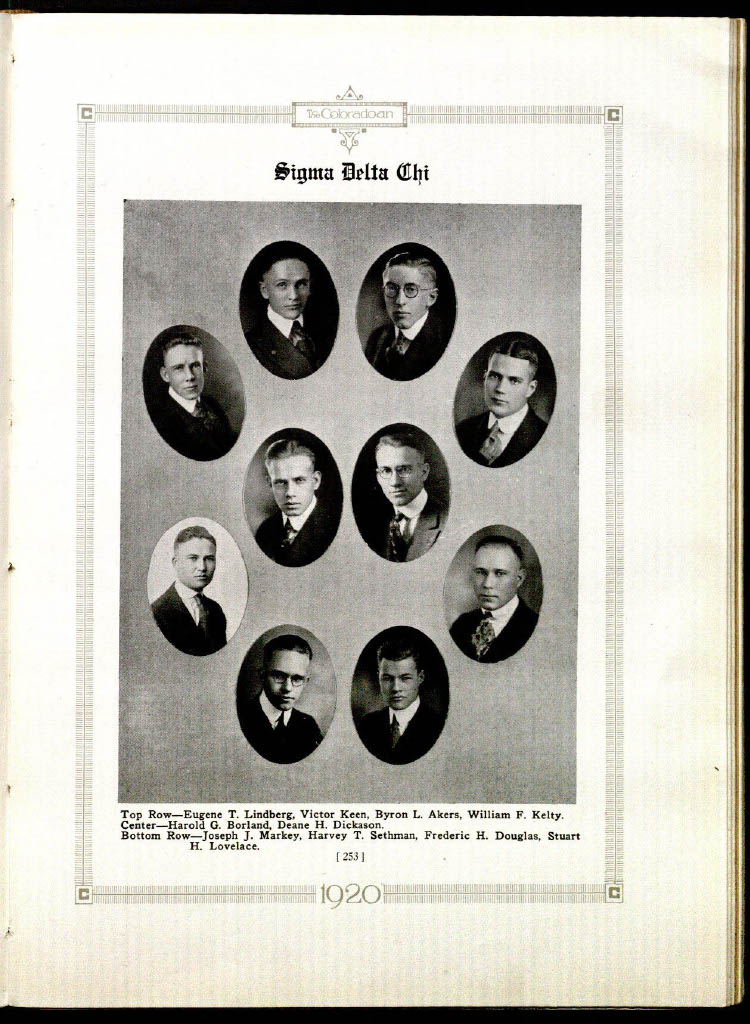
Most of the students pictured here, Borland included, were suspended for one year (Deane H. Dickason was expelled) for their part in the publication of a lampoon edition of the school newspaper Silver and Gold. The edition featured harmless jabs at campus staff and societies, including a good natured observation on an all-girl sorority: “The Chi Omegas are reported to be stepping out on the sorority house balcony at night with nothing but a bright light on.” Borland never returned to the University; he went home to Flagler where he worked for a year on his father’s paper The Flagler News. In 1921, he entered Columbia School of Journalism, taking his B.A. degree in Literature there in June of 1923. In 1944, Borland was awarded an honorary degree from the University of Colorado. Borland reflected on the suspension in an April 1970 Denver Post interview:
“I was too big for my britches. We needed something to jar us down to work. A thing like that kills you or drives you to justify yourself. It was stupidity–followed by a stupid reaction by the University. We were kids. . .But it was an overreaction. It wasn’t all that bad.” Borland summed up by saying, “those involved in the Quill Edition ruckus turned out pretty well, and not one of them ended up in a penitentiary.”
 halborlandamericancountryman.com